






What's Happening?
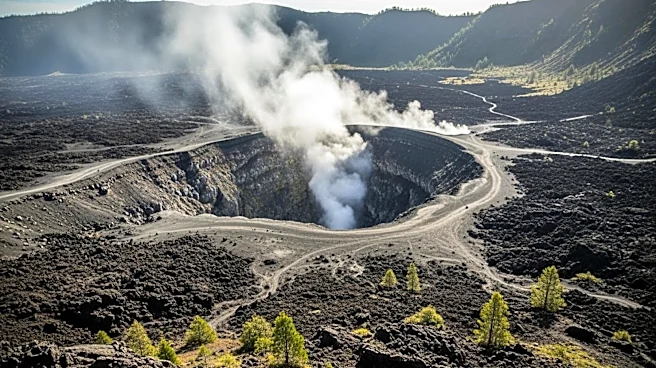
NASA's Earth Observatory has released new imagery and analysis of the volcanic activity in the Ahuachapán region of El Salvador. The area is part of the Central American Volcanic Arc, which stretches over 1,000 kilometers along the Pacific coast. The region is characterized
by a series of active volcanoes, including Santa Ana, the tallest in the country, and Izalco, known as the 'Lighthouse of the Pacific.' Santa Ana has a history of eruptions, with the most recent significant one occurring in 2005. Izalco, although currently inactive, was once a prominent feature due to its frequent eruptions. The geothermal activity in the area supports a power plant that has been operational since 1975, contributing significantly to El Salvador's electricity supply.
Why It's Important?
The volcanic activity in the Ahuachapán region is significant for both its potential hazards and its contributions to energy production. The geothermal power plant in the area provides a substantial portion of El Salvador's electricity, highlighting the importance of sustainable energy sources in the region. However, the active volcanoes also pose risks, including potential eruptions and steam explosions, which could impact local communities and infrastructure. Understanding and monitoring these geological features are crucial for disaster preparedness and energy planning in El Salvador.