




What's Happening?
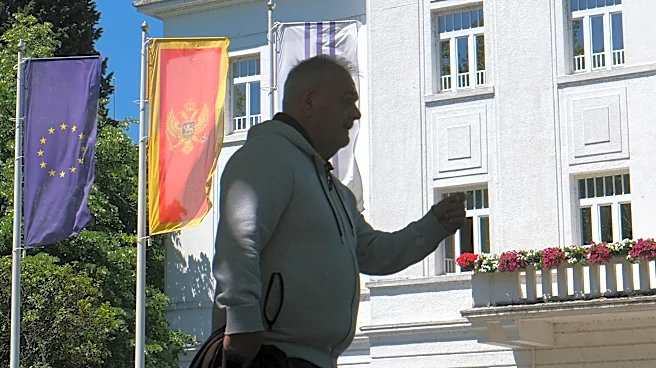
Montenegro is on track to join the European Union by 2028, as confirmed by EU leaders and Montenegro's president following a summit in Tivat, Montenegro. The summit, attended by leaders from the EU and Western Balkan countries, focused on the EU's enlargement
strategy, particularly in the Balkans. European Commission President Ursula von der Leyen emphasized that Montenegro's accession is 'within reach,' highlighting the EU's strategic interest in expanding its membership to counter security and economic threats from Russia and China. The EU has formed a working group to draft an accession treaty for Montenegro, with President Jakov Milatovic expressing confidence in achieving EU membership by 2028.
Why It's Important?
Montenegro's potential EU membership is significant for both the country and the EU. For Montenegro, joining the EU would mean access to the single market, increased investment, and stronger security ties. For the EU, expanding into the Balkans is a strategic move to enhance economic and security capabilities, especially in light of geopolitical challenges such as trade imbalances with China and security threats from Russia. The enlargement process also underscores the EU's commitment to supporting democratic reforms and stability in the region, which could have broader implications for regional peace and cooperation.
What's Next?
Montenegro will continue to work on meeting the EU's accession criteria, which includes reforms in areas such as corruption, democratic institutions, and economic policies. The EU will likely provide support and guidance to Montenegro and other candidate countries in the Balkans to facilitate their accession process. The success of Montenegro's EU bid could influence other Balkan countries' aspirations to join the EU, potentially accelerating the enlargement process in the region.
Beyond the Headlines
The EU's enlargement strategy in the Balkans reflects broader geopolitical dynamics, including the need to counter Russian and Chinese influence in the region. The process also highlights the EU's role as a stabilizing force in Europe, promoting democratic values and economic integration. Montenegro's accession could serve as a model for other candidate countries, demonstrating the benefits of EU membership and the importance of aligning with EU standards and values.