










What's Happening?
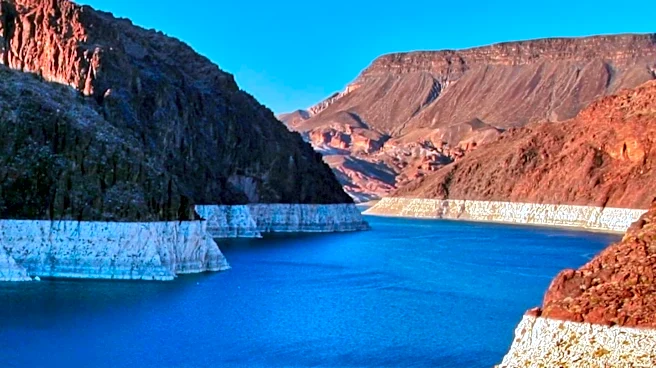
The ongoing drought in the Colorado River Basin has led to critically low water levels in Lake Powell and Lake Mead, prompting policymakers and researchers to explore various proposals to stabilize the river system. Current water levels are significantly
below historical norms, with Lake Mead at 27% capacity and Lake Powell at 23%. Proposed solutions include reducing water usage by Arizona, Nevada, and California, shifting agricultural practices, and potentially draining Lake Powell to prioritize Lake Mead. These measures aim to address the long-term water supply-demand imbalance exacerbated by climate change and overuse.
Why It's Important?
The water crisis in the Colorado River Basin has far-reaching implications for millions of people and vast agricultural areas dependent on these water sources. The proposed measures could significantly impact water allocation, agricultural practices, and energy production from hydropower. The situation highlights the urgent need for sustainable water management strategies in the face of climate change. The decisions made will affect water security, economic stability, and environmental conservation in the region, making it a critical issue for policymakers and stakeholders.
What's Next?
The next steps involve further negotiations among states and stakeholders to finalize water conservation agreements. The implementation of proposed measures, such as agricultural changes and potential infrastructure modifications, will require careful planning and collaboration. Monitoring the effectiveness of these strategies will be crucial in ensuring long-term water sustainability. Additionally, public and political support will be necessary to overcome challenges and implement necessary changes.