







What's Happening?
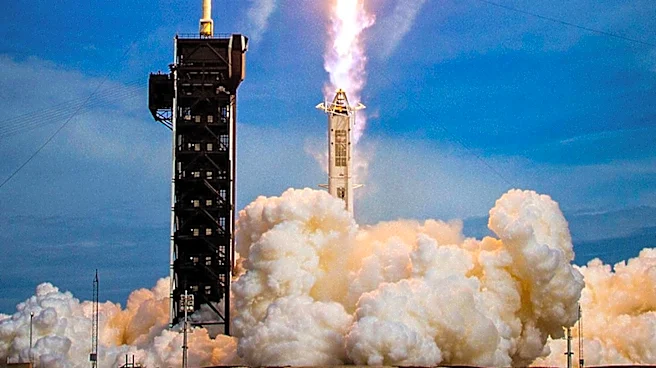
Sweden's military, having launched its first satellite in May, is concerned about the bottleneck at U.S. and European launch facilities, which could hinder the development of its orbital capabilities. Swedish Armed Forces Rear Adm. Anders Sundeman highlighted
the urgency of expanding Sweden's space assets amid increasing global demand for satellite launches. Sweden plans to launch a Finnish-made ICEYE satellite later this year and aims to have 10 operational satellites in orbit. To address these challenges, Sweden is developing its own launch facility at Esrange, which will host its first orbital satellite launch in 2028.
Why It's Important?
The bottleneck in satellite launch capabilities poses a strategic challenge for Sweden as it seeks to enhance its space-based defense and surveillance capabilities. The reliance on U.S. launch providers, which are overbooked due to high demand, underscores the need for Sweden to develop its own launch infrastructure. This development is crucial for maintaining national security and technological competitiveness. The establishment of a European mainland spaceport at Esrange could strengthen Europe's position in the commercial space sector and reduce dependency on external launch providers.
What's Next?
Sweden's efforts to establish its own launch capabilities at Esrange are expected to continue, with the first orbital launch planned for 2028. This initiative will likely involve collaboration with European partners to enhance regional launch capabilities. The Swedish government may also explore partnerships with private space companies to expedite the development of its space infrastructure. As Sweden expands its satellite fleet, it will need to address potential security threats, such as GPS interference reportedly caused by Russia, and ensure the resilience of its space assets.