
What's Happening?
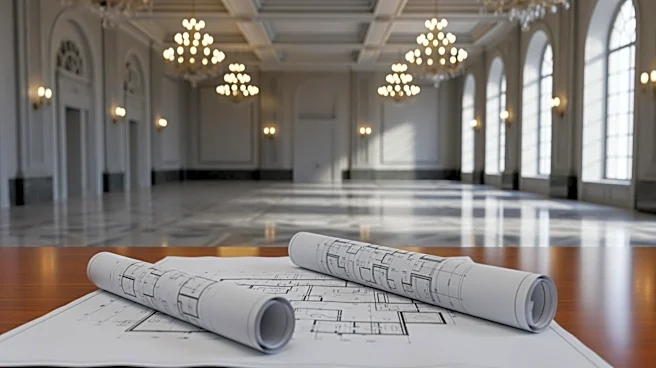
A federal appeals court has asked a Washington federal judge to clarify his ruling that blocked President Trump from constructing a 90,000-square-foot ballroom on the site of the demolished White House
East Wing. The US Court of Appeals for the DC Circuit's decision temporarily sidesteps the Trump administration's request to pause a lower court's decision that halted construction until Congress approves the project. Justice Department lawyers argued that the lower court's order, which paused construction and left an open excavation site, is untenable and poses security risks to President Trump, his family, and staff. The appeals court has sent the case back to Senior Judge Richard Leon to address a request for clarification on his ruling, particularly regarding exceptions for construction needed for safety and security. The panel extended a stay on Leon's order until April 17 to allow the federal government time to seek Supreme Court review.
Why It's Important?
The case highlights the ongoing legal and political challenges surrounding the construction of new facilities at the White House. The Trump administration argues that the ballroom is essential for national security, citing features like military-grade ventilation and fortified structures. The National Trust for Historic Preservation, which challenged the project, emphasizes the need to preserve the historic significance of the White House. The outcome of this case could set a precedent for how future administrations undertake construction projects on historically significant sites. It also underscores the tension between executive actions and judicial oversight, particularly when national security is cited as a justification for bypassing traditional approval processes.
What's Next?
The federal government may seek emergency relief from the Supreme Court if the appeals court's remand order is not resolved in its favor. The district court is expected to provide further clarification on the ruling, which could influence whether construction can proceed. The National Trust for Historic Preservation and other stakeholders will likely continue to advocate for the preservation of the White House's historical integrity. The case could prompt discussions in Congress about the approval process for significant construction projects on federal properties, potentially leading to legislative changes.