


What's Happening?
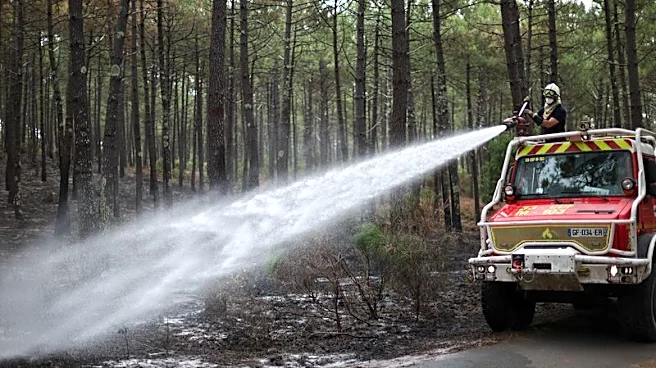
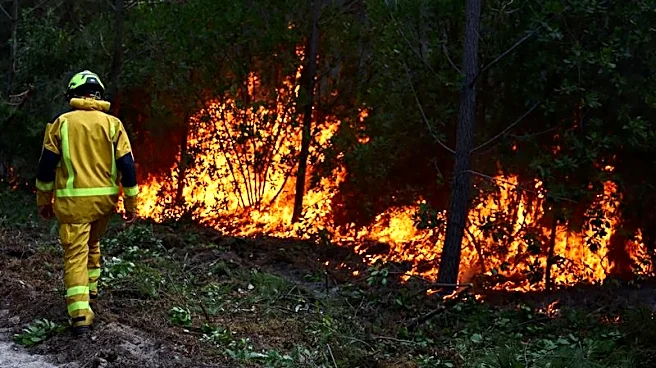
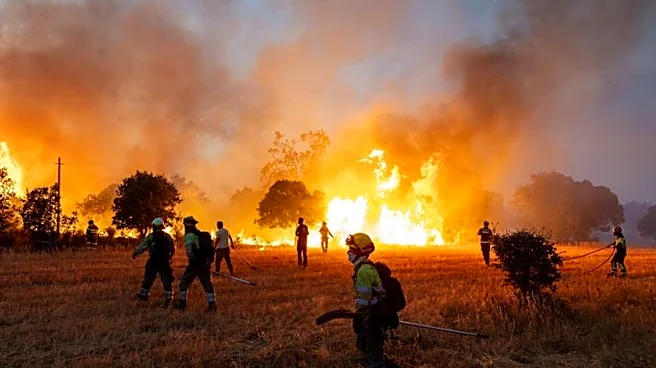
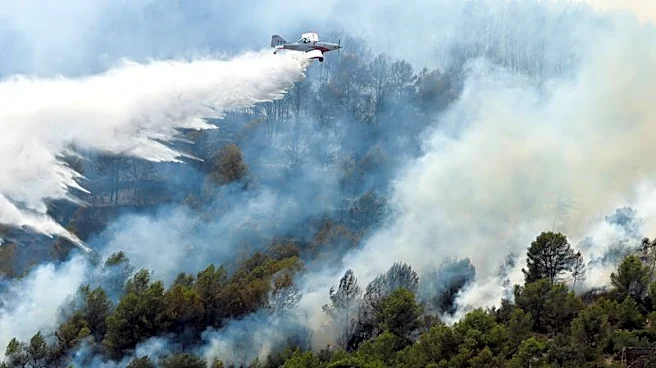
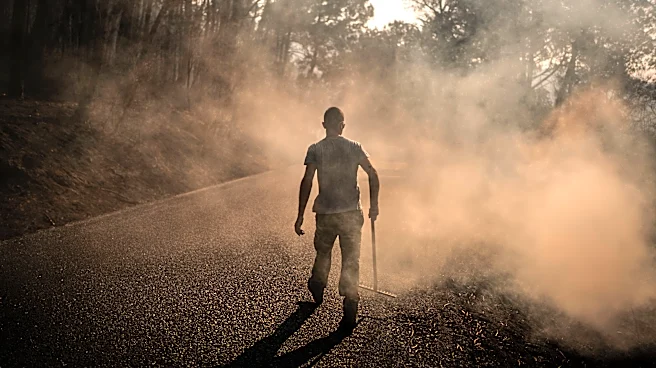
Greece is currently facing severe wildfires on the outskirts of Athens and on the island of Crete, exacerbated by a record-breaking heatwave. The fires have prompted evacuations in several areas, including communities west of Athens and coastal regions
in Crete. The Greek fire brigade is on high alert, deploying water-bombing aircraft to combat the blazes. The fires are part of a broader pattern of wildfires across Europe, driven by extreme heat and drought conditions. In France and Spain, similar fires have been brought under control, allowing some evacuees to return home. The situation in Greece remains critical, with strong winds complicating firefighting efforts.
Why It's Important?
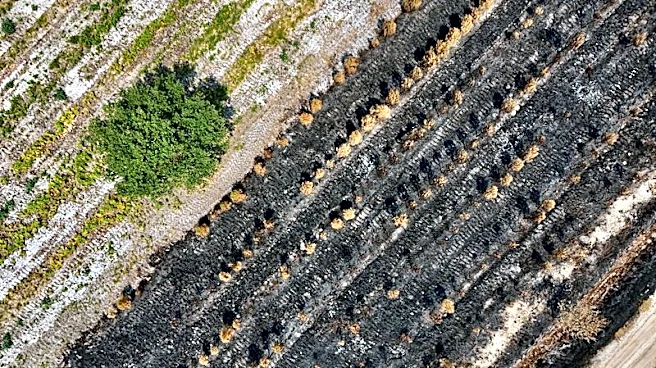
The wildfires in Greece highlight the increasing frequency and intensity of climate-related disasters, posing significant risks to human health, property, and ecosystems. The fires have forced thousands to evacuate, disrupted tourism, and destroyed natural landscapes, including olive groves and farmland. The situation underscores the urgent need for effective climate adaptation and mitigation strategies. The health impacts are also concerning, as smoke and ash from the fires contribute to air pollution, which can lead to respiratory and cardiovascular issues. The events in Greece are part of a larger trend of climate change-induced extreme weather affecting Europe and beyond.
What's Next?
Efforts to control the fires in Greece are ongoing, with authorities focusing on containing the blazes and preventing new outbreaks. The Greek government may need to enhance its emergency response capabilities and invest in long-term climate resilience measures. International cooperation and support could play a role in addressing the immediate crisis and in developing strategies to mitigate future risks. The situation may also prompt discussions on climate policy at both national and international levels, emphasizing the need for coordinated action to address the root causes of climate change.
Beyond the Headlines
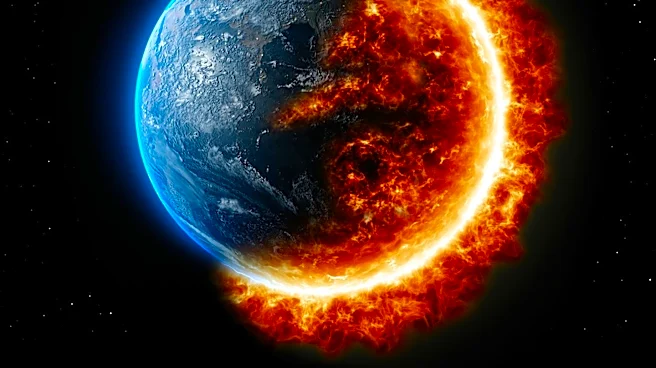
The wildfires in Greece and across Europe are a stark reminder of the broader implications of climate change, including its impact on biodiversity, agriculture, and human livelihoods. The destruction of natural habitats and agricultural land can have long-term economic and ecological consequences. Additionally, the increased frequency of such events may lead to shifts in population dynamics, as people move away from high-risk areas. The situation also raises ethical questions about global responsibility for climate change and the need for equitable solutions that support vulnerable communities.