




What's Happening?
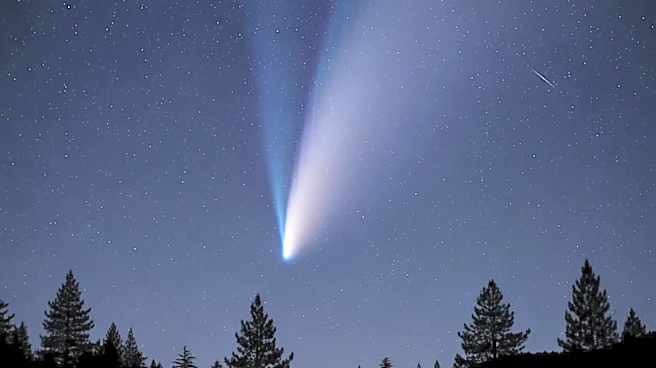
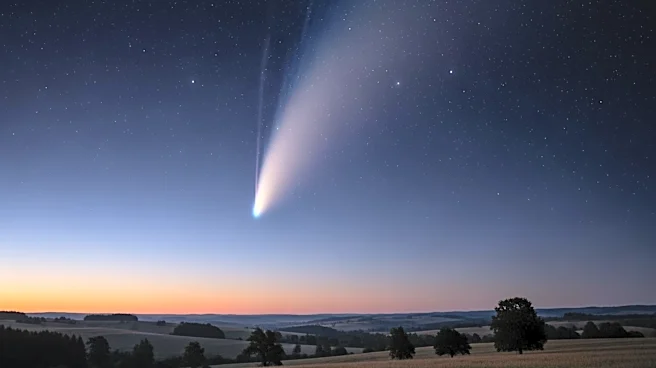
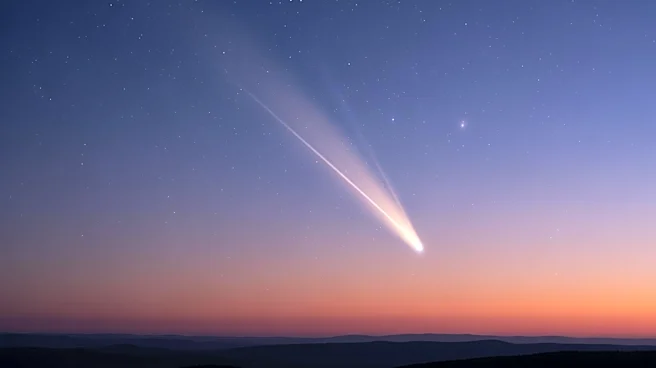
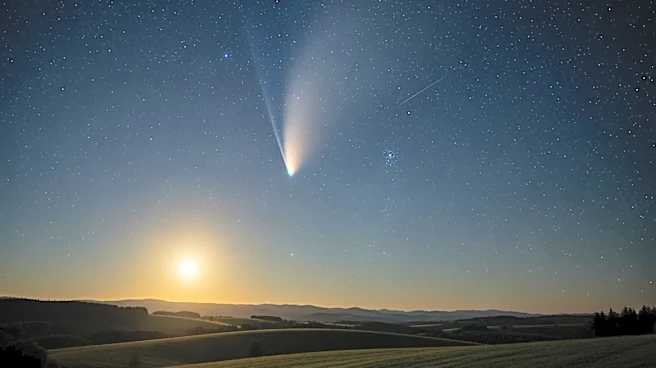
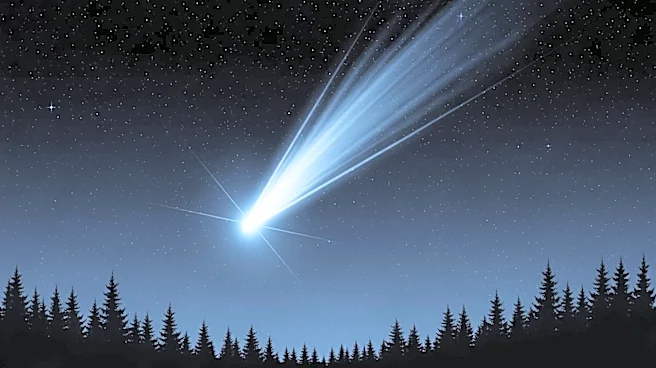
Comet PanSTARRS, officially designated as C/2025 R3, is currently visible in the Northern Hemisphere, offering a rare celestial event for stargazers. Discovered in September 2025 by the Pan-STARRS telescopes in Hawaii, the comet is expected to be visible with
the naked eye under optimal conditions. The best viewing times are around dawn and late evening, particularly on April 17 and 18, as the comet approaches its perihelion phase, the closest point to the sun. The comet is located within the Great Square of Pegasus, a constellation easily identifiable in the eastern sky. Observers are advised to use binoculars for a clearer view, as the comet's brightness is estimated to be around magnitude +4.7 to +5.0, making it faintly visible to the naked eye.
Why It's Important?
The visibility of Comet PanSTARRS presents a unique opportunity for both amateur and professional astronomers to observe a celestial body that orbits the sun approximately every 170,000 years. This event not only enriches public interest in astronomy but also provides valuable data for scientists studying the composition and behavior of comets. The comet's appearance could inspire educational activities and increase public engagement with space science, potentially influencing future interest in STEM fields. Additionally, such events highlight the importance of astronomical research and the need for continued investment in space observation technologies.
What's Next?
As Comet PanSTARRS continues its journey through the solar system, it will reach its closest approach to Earth on April 27, coming within 44 million miles of the planet. This proximity will offer further opportunities for observation and study. Astronomers will continue to monitor the comet's trajectory and brightness, providing updates to the public on optimal viewing times and locations. The comet's passage may also lead to increased interest in upcoming celestial events, such as the anticipated return of Halley's Comet in 2061.