




What's Happening?
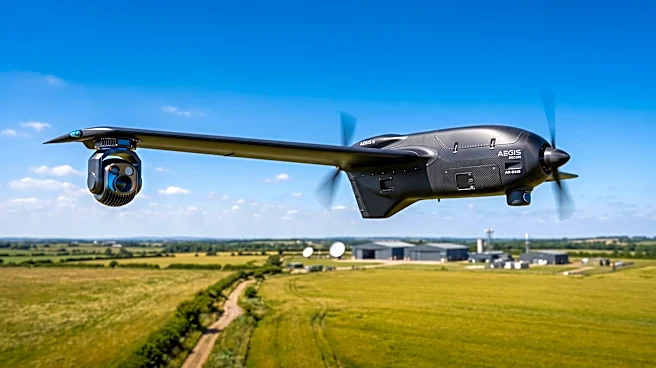
Skydio, a drone manufacturer, has introduced the F10 Lightrunner, a fixed-wing camera drone featuring a distinctive asymmetrical design. This drone is engineered for autonomous deployment and high-speed flight, specifically addressing the challenge of
camera occlusion during reconnaissance missions. Traditional fixed-wing reconnaissance drones often obscure their cameras with wings or tails when turning at low altitudes. Skydio's solution involves placing the camera on a wingtip, which necessitates an asymmetrical structure to maintain balance and aerodynamic efficiency. The F10 Lightrunner compensates for the camera's weight and drag by extending the wing on the camera side to provide more lift and repositioning the motors unevenly to balance thrust. This design allows the drone to continuously track targets by turning predominantly in one direction, keeping the camera unobstructed. The drone also integrates with a MegaDock system, enabling autonomous launch, recovery, and recharging of up to five F10 units, facilitating continuous flight operations with minimal human intervention.
Why It's Important?
The introduction of the Skydio F10 Lightrunner signifies a notable advancement in drone technology for public safety, inspection, and reconnaissance applications. Its asymmetrical design directly tackles a critical limitation of conventional fixed-wing drones, offering clearer and more consistent visual data during surveillance. This innovation could significantly enhance the effectiveness of operations requiring continuous aerial monitoring, such as search and rescue, infrastructure inspection, and border patrol. The autonomous MegaDock system further boosts operational efficiency by reducing the need for manual handling and ensuring drones are readily available for deployment. For industries reliant on drone-collected data, this could translate into more reliable information, reduced operational costs, and improved safety for personnel. The F10's ability to fly at high speeds and for extended durations, combined with its advanced obstacle avoidance, positions it as a valuable tool for various governmental and commercial entities in the U.S.
What's Next?
The Skydio F10 Lightrunner is expected to be deployed in public safety, inspection, and other enterprise applications. Its integration with the MegaDock system suggests a future where drone operations are increasingly automated and scalable. Potential next steps include further refinement of its autonomous capabilities, expansion of its operational range, and adaptation for specialized payloads beyond standard cameras. As the technology matures, it could see broader adoption across various sectors, potentially influencing regulatory frameworks for autonomous drone operations. The success of this asymmetrical design may also inspire further innovation in drone aerodynamics, leading to more specialized and efficient aerial platforms for diverse applications. Skydio's focus on enterprise solutions indicates a strategic move towards addressing specific industry needs with highly specialized drone technology.
Beyond the Headlines
The F10 Lightrunner's unconventional design challenges traditional aerospace engineering principles, highlighting a growing trend towards function-driven form in drone development. The willingness to embrace asymmetry to solve a specific operational problem underscores a shift from purely aesthetic or conventional design constraints to performance-optimized solutions. This approach could lead to a new generation of drones with highly specialized and potentially 'unorthodox' appearances, each tailored for maximum efficiency in its intended role. Furthermore, the emphasis on autonomous operation and integration with docking systems points to a future where drones are not just tools but integral, self-managing components of larger operational ecosystems. This development also raises questions about the evolving role of human operators, who may transition from direct control to supervisory and analytical functions, overseeing fleets of autonomous drones.