

What's Happening?
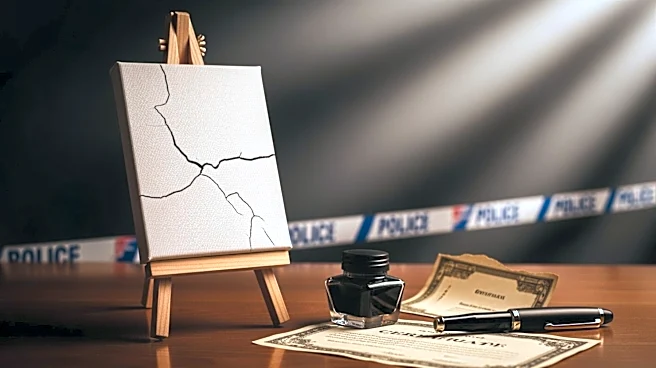
A father and daughter from New Jersey have pleaded guilty in federal court to orchestrating a scheme that involved the sale of over 200 forged artworks. These artworks were falsely attributed to renowned artists such as Andy Warhol, Banksy, and Pablo
Picasso. The duo, Erwin Bankowski and Karolina Bankowska, operated this scheme between 2020 and 2025, selling the forgeries to auction houses and galleries across the United States. They managed to earn approximately $2 million from these sales. The forgeries were created by an artist in Poland, and the pair went to great lengths to falsify the provenance of the artworks, including forging certificates of authenticity. The scheme also involved the misrepresentation of Native American-produced goods, which led to additional federal charges.
Why It's Important?
This case highlights significant vulnerabilities in the art market, where the authenticity of artworks can be difficult to verify, especially for unsophisticated buyers. The fraudulent activities of Bankowski and Bankowska not only defrauded buyers but also undermined trust in the art market. The case also underscores the challenges faced by Native American artists, as the misrepresentation of Indigenous artworks can have cultural and economic repercussions. The art market, valued at $57.5 billion globally, remains susceptible to such fraudulent activities, which can have far-reaching impacts on collectors, dealers, and artists alike.
What's Next?
Bankowski and Bankowska face a maximum prison sentence of 20 years and are required to pay at least $1.9 million in restitution. The case may prompt increased scrutiny and regulatory measures within the art market to prevent similar fraudulent activities in the future. Auction houses and galleries might implement more rigorous verification processes to ensure the authenticity of artworks. Additionally, there could be a push for greater protection and recognition of Native American art to prevent cultural exploitation.
Beyond the Headlines
The case raises ethical questions about the responsibility of art dealers and auction houses in verifying the authenticity of artworks. It also highlights the need for better education and resources for art buyers to make informed decisions. The exploitation of Native American art in this scheme points to broader issues of cultural appropriation and the need for stronger legal protections for Indigenous artists.