





What's Happening?
Wisconsin's prison population has reached a new record high, with 23,854 individuals in custody, surpassing the 2019 record and nearly 6,000 beyond the prisons' intended capacity. This overcrowding has been a persistent issue for at least two decades,
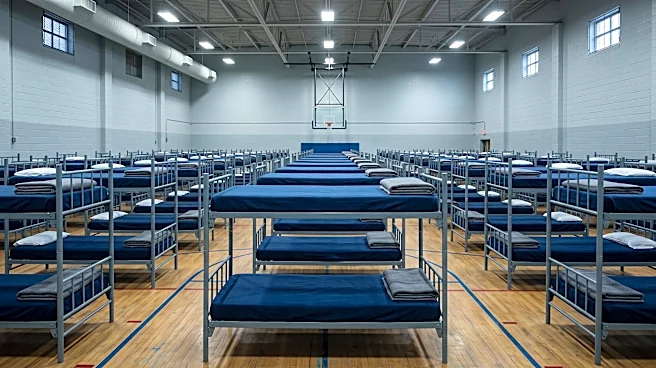
leading to measures such as adding bunk beds and increasing the number of people per cell. Women's prisons are particularly affected, with some holding more than double their design capacity, forcing staff to convert offices into dorms and set up beds in gyms. Governor Tony Evers, who previously vowed to address prison crowding and reduce the population, has faced legislative hurdles in implementing reforms. While the Department of Corrections (DOC) spokesperson Kevin Hoffman noted the department's limited statutory authority to reduce the population, Governor Evers recently signed executive orders in April allowing eligible prisoners to apply for sentence shortening, a first in 25 years. Overcrowding exacerbates staffing shortages, increases dangers, and limits access to crucial treatment, education, and work programs designed for rehabilitation.
Why It's Important?
The record-high prison population in Wisconsin has significant implications for public safety, human rights, and state finances. Overcrowding creates a more volatile environment within correctional facilities, increasing the risk of violence and making it challenging for correctional officers to maintain order. The severe understaffing, with a shortage of approximately 658 full-time correctional officers and sergeants, further compromises safety and operational efficiency. For incarcerated individuals, overcrowding leads to diminished quality of life, reduced access to essential programs, and potentially longer stays due to limited rehabilitation opportunities. This cycle can contribute to higher recidivism rates, undermining the goal of reintegration into society. Economically, Wisconsin spends about $1.06 billion annually on its prisons, with an estimated cost of $50,000 per incarcerated person per year, significantly more than the state's per-student spending in public K-12 schools. This financial burden, coupled with the social costs of high incarceration rates, particularly among Black residents, highlights a critical need for systemic reform and more effective resource allocation.
What's Next?
The immediate future will involve continued efforts by Governor Evers' administration to address the overcrowding, despite legislative resistance. The Commutation Advisory Board has begun hearing testimony from applicants for sentence shortening, with a second hearing scheduled for September 18. The impact of these commutations on the overall prison population remains to be seen. Policymakers and advocates will likely continue to debate various solutions, including closing older facilities, transforming others into vocational centers, and expanding early release programs for nonviolent offenders. However, significant changes will require bipartisan cooperation between the Governor and the Republican-led Legislature, which has historically stymied such efforts. The upcoming election year will also play a crucial role, as control of both the governorship and the state Legislature is at stake, potentially influencing the direction of criminal justice reform. Without comprehensive legislative action, the strain on Wisconsin's correctional system, its staff, and its incarcerated population is expected to persist.
Beyond the Headlines
The persistent overcrowding in Wisconsin's prisons reflects a broader national challenge in criminal justice, particularly concerning the balance between punitive measures and rehabilitative goals. The state's 'truth-in-sentencing' laws, adopted in 1998, mandate that most prisoners serve their full sentences without parole, contributing significantly to the rising population. This policy, while intended to ensure accountability, has inadvertently created a system that struggles to manage its inmate numbers and provide adequate support for reintegration. The disproportionate incarceration of Black residents in Wisconsin also points to systemic issues of racial inequality within the justice system. The lack of physical space for programs and the shortage of staff not only compromise the well-being of those incarcerated but also hinder efforts to reduce recidivism and improve public safety. The situation in Wisconsin underscores the ethical dilemma of maintaining a system that is both costly and seemingly ineffective in achieving its stated goals, prompting a deeper societal conversation about the purpose of incarceration and alternative approaches to justice.