




What's Happening?
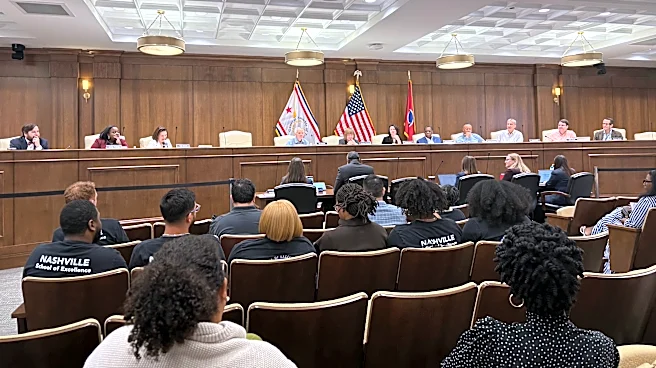
During its quarterly meeting, the Tennessee Public Charter School Commission voted to approve the appeals of two charter schools, Music City Academy and the Gate School, which had previously been denied by the Metro Nashville Public Schools (MNPS) review
board. The commission also denied appeals for Nashville School of Excellence and Empowerment Academy Nashville. MNPS had cited negative fiscal impacts on the school district if these schools were allowed to open. However, State Commission Executive Director Tess Stovall stated that the district's reviews did not provide sufficient evidence of significant financial impact. Commissioner Eddie Smith suggested that the Tennessee General Assembly should re-evaluate the definition of fiscal impact to provide clearer guidelines. The commission concluded that Music City Academy and the Gate School would benefit the community by offering alternative learning options not currently available within the school district. This decision allows these two charter schools to proceed with their plans to open.
Why It's Important?
This decision by the Tennessee Public Charter School Commission has significant implications for educational policy and the landscape of public education in Nashville. By overturning MNPS's denials, the commission is asserting its authority in the charter school approval process, potentially setting a precedent for future appeals. The debate over 'fiscal impact' highlights a recurring tension between traditional public school districts and charter schools, where districts often argue that charter expansion diverts essential resources. The commission's finding that MNPS did not adequately prove significant financial impact could influence how similar arguments are evaluated in other parts of the state. Furthermore, the approval of Music City Academy and the Gate School means an increase in educational choices for families in Nashville, potentially leading to greater competition among schools and a push for innovation in teaching models, such as the Harkness-style model proposed by the Gate School. This outcome could empower more charter school applicants to bypass local district denials and appeal directly to the state commission.
What's Next?
Following the approval of Music City Academy and the Gate School, commission chair Chris Richards announced that this decision opens a pathway for prospective charter schools to submit applications directly to the state commission for the next five years, bypassing initial review by local school districts like MNPS. The commission will now begin preparations to receive new charter start applications from sponsors in Davidson County during the upcoming cycle. This shift could lead to a more streamlined process for charter school establishment in the region, potentially accelerating the growth of the charter sector. Local school districts, including MNPS, may need to re-evaluate their strategies for reviewing charter applications and presenting their arguments, particularly regarding fiscal impact, given the commission's recent stance. The Tennessee General Assembly might also consider Commissioner Eddie Smith's suggestion to revisit and clarify the definition of 'fiscal impact' to provide more precise guidelines for future evaluations.
Beyond the Headlines
The commission's decision underscores a broader national trend of increasing state-level oversight and intervention in local educational governance, particularly concerning charter schools. This move could be seen as a step towards centralizing control over school choice initiatives, potentially diminishing the autonomy of local school boards. The emphasis on 'alternative learning options' and 'community benefit' by the commission suggests a prioritization of diverse educational models, which could lead to a more varied educational landscape but also raise questions about equitable resource distribution across different school types. The ongoing debate about fiscal impact also touches upon the fundamental funding structures of public education and how the growth of charter schools affects the financial stability of traditional public schools. This situation highlights the complex interplay between state policy, local control, and the evolving demands for educational innovation and choice.