






What's Happening?
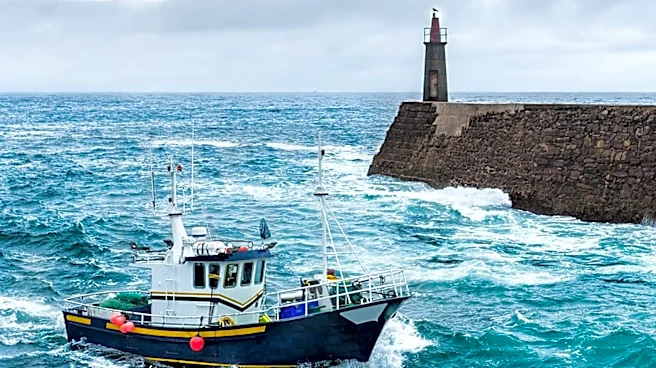
The bodies of two French fishermen, who had been missing since their trawler, the Maranello, sank in the English Channel on August 29, have been recovered. French prosecutors confirmed that divers found and retrieved the bodies on Saturday after weather
conditions improved, allowing search operations to resume. The Maranello had reported problems with its fishing gear before sinking off the coast of Plymouth. Three of the five crew members were rescued by a nearby vessel, the Stradale, shortly after the distress call was made around 6:00 PM BST on August 29. A major search operation, involving HM Coastguard, RNLI lifeboats from Devon and Cornwall, and French authorities, was initially suspended after two days due to poor weather. One of the rescued sailors was transported to a hospital in Truro, Cornwall, by helicopter, while the other two received medical attention in Plymouth.
Why It's Important?
This incident highlights the inherent dangers faced by those working in the fishing industry, particularly in challenging maritime environments like the English Channel. The collaborative search and rescue efforts involving both UK and French authorities underscore the importance of international cooperation in maritime safety and emergency response. The suspension of the search due to adverse weather conditions also emphasizes the critical role of environmental factors in such operations and the risks involved for rescue teams. For the fishing communities in both France and the UK, such tragedies have a profound impact, bringing to light the human cost of this vital but hazardous profession. It also draws attention to the need for stringent safety protocols and continuous monitoring of fishing vessels to prevent future incidents.
What's Next?
Investigations into the cause of the Maranello's sinking are expected to continue, with French prosecutors leading the inquiry. Authorities will likely examine the reported problems with the fishing gear and other potential factors that contributed to the vessel's loss. The findings of this investigation could lead to recommendations for improved safety measures or equipment standards for fishing trawlers operating in the English Channel. The incident may also prompt a review of search and rescue protocols, particularly concerning operations in challenging weather conditions. For the families of the deceased fishermen, the recovery of their bodies provides a measure of closure, though the emotional and economic impact on their communities will persist. Discussions around the safety of maritime workers and the support systems available to them are also likely to continue.
Beyond the Headlines
Beyond the immediate tragedy, this event underscores the broader challenges facing the commercial fishing industry, including the demanding nature of the work, the unpredictable marine environment, and the economic pressures that can sometimes compromise safety. The incident serves as a stark reminder of the vulnerability of human life at sea and the critical role of robust regulatory frameworks and international maritime agreements in protecting those who work in these conditions. It also highlights the often-overlooked sacrifices made by fishing communities, who contribute significantly to the economy and food supply but often operate under considerable risk. The recovery of the bodies, while tragic, is a testament to the dedication of rescue services and the solidarity between nations in times of crisis, reinforcing the shared responsibility for safety in international waters.