






What's Happening?
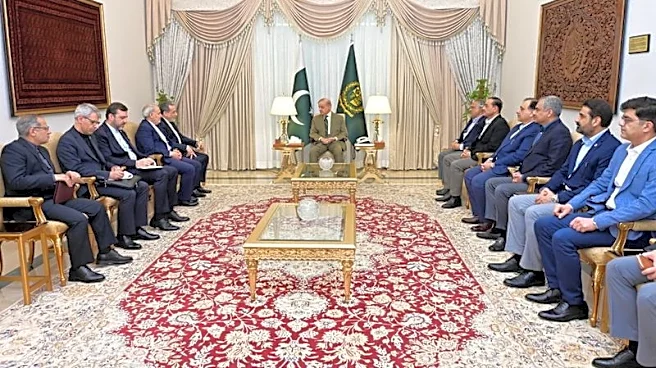
Iranian Foreign Minister Abbas Araghchi has communicated Tehran's demands to Pakistani officials as Pakistan mediates between the U.S. and Iran. This development follows weeks of conflict, a U.S.-announced ceasefire, and tensions over a U.S. naval blockade
of Iranian ports. President Trump indicated that Iran is preparing an offer to meet U.S. demands, while the U.S. maintains the blockade until an agreement is reached. The U.S. demands include Iran relinquishing enriched uranium and ensuring free oil transit through the Strait of Hormuz. Iran has labeled the blockade an 'act of war'. The U.S. has expanded the blockade globally, requiring U.S. Navy approval for vessels traveling to or from Iranian ports.
Why It's Important?
The situation underscores the geopolitical tensions in the Middle East, particularly concerning the Strait of Hormuz, a critical energy chokepoint. The U.S. blockade and Iran's response could impact global oil markets and international relations. The involvement of Pakistan as a mediator highlights the regional complexities and the potential for diplomatic resolutions. The outcome of these negotiations could influence U.S. foreign policy and military strategy in the region, affecting global energy security and economic stability.
What's Next?
The continuation of the blockade and Iran's potential response could escalate tensions further. Diplomatic efforts by Pakistan may lead to negotiations that could ease the blockade. However, any Iranian attempt to disrupt the Strait of Hormuz could be seen as a ceasefire violation, potentially leading to military confrontations. The international community will likely monitor the situation closely, given its implications for global energy supplies and regional stability.