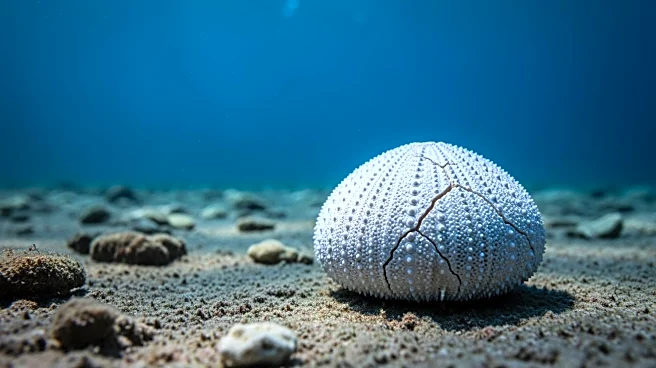

What's Happening?
A global pandemic is causing mass mortality among sea urchins, significantly impacting marine ecosystems. The pandemic has reached the Canary Islands, where the sea urchin species Diadema africanum has been
severely affected. Over the past four years, this pandemic has also been observed in the Caribbean, Mediterranean, Red Sea, Sea of Oman, and the western Indian Ocean. The die-off has led to a drastic reduction in sea urchin populations, with some areas experiencing up to a 99.7% decrease. The cause of the pandemic is not yet confirmed, but it is suspected to be linked to pathogens such as scuticociliate ciliates or amoebae. The decline in sea urchin populations threatens the balance of marine ecosystems, as these creatures play a crucial role in maintaining the health of coral reefs and other marine habitats.
Why It's Important?
The decline of sea urchin populations poses a significant threat to marine ecosystems, as these organisms are vital for controlling algae growth and supporting biodiversity. The loss of sea urchins can lead to the overgrowth of algae, which can smother coral reefs and disrupt the balance of marine life. This pandemic highlights the vulnerability of marine ecosystems to disease and environmental changes, potentially exacerbated by climate change. The impact on marine biodiversity could have far-reaching consequences for fisheries, tourism, and coastal communities that rely on healthy marine environments. Understanding and addressing the causes of this pandemic are crucial for preserving marine biodiversity and the services these ecosystems provide.
What's Next?
Researchers are continuing to investigate the cause of the sea urchin pandemic and its spread. Efforts are needed to identify the pathogen responsible and develop strategies to mitigate its impact. Monitoring and conservation measures may be necessary to protect remaining sea urchin populations and restore affected ecosystems. International collaboration and research are essential to address this global issue and prevent further declines in marine biodiversity. The situation underscores the need for increased awareness and action to protect marine environments from emerging threats.