




What's Happening?
Jasmine Crowe, founder of Goodr, has transformed her initial personal effort to feed the homeless into a technology-driven company that has served 30 million meals and diverted four million pounds of food from landfills. Starting in 2017, Goodr addresses
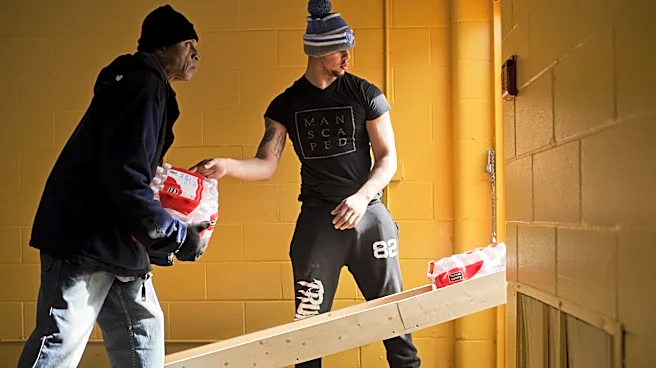
the paradox of food waste alongside food insecurity by connecting businesses with surplus edible food to those in need. Crowe's journey began with 'Sunday Soul,' an initiative where she cooked and distributed restaurant-quality meals to hundreds of homeless individuals from her Atlanta apartment. This experience revealed the significant amount of perfectly edible food being discarded by businesses. Goodr's model utilizes a platform for organizations to report surplus food, which is then collected and redistributed to non-profit groups and community partners. The company also employs blockchain technology to track donations, providing transparency and documentation for participating businesses. By March 2025, Goodr operated in 15 states and established over two dozen free grocery stores.
Why It's Important?
Goodr's innovative approach tackles two critical issues in the U.S.: food waste and food insecurity. The U.S. Department of Agriculture reported that 11.8% of American households experienced food insecurity in 2017, highlighting the urgent need for effective solutions. By leveraging technology and logistics, Goodr provides a scalable and efficient system for redirecting food that would otherwise go to waste, thereby reducing environmental impact and providing sustenance to vulnerable populations. The company's expansion into free grocery stores and neighborhood food programs, particularly during the COVID-19 pandemic, demonstrates its adaptability and commitment to addressing diverse food access challenges. This model offers a sustainable alternative to traditional charitable donations, empowering businesses to contribute to community welfare while also potentially benefiting from tax incentives and improved corporate social responsibility.
What's Next?
Goodr is expected to continue expanding its operations, potentially reaching more states and establishing additional free grocery stores and community food programs. The company's success in diverting millions of pounds of food and serving millions of meals suggests a robust and replicable model for addressing food waste and insecurity. Future developments may include further technological enhancements to its platform, fostering more partnerships with large corporations and institutions, and advocating for policies that support food recovery efforts. The ongoing challenge will be to maintain and scale its logistical network to meet the growing demand for food assistance while continuously innovating to optimize food distribution and minimize waste across the country.
Beyond the Headlines
Jasmine Crowe's personal journey, from cooking for 500 people in her apartment to leading a multi-state enterprise, underscores the power of individual initiative in addressing systemic problems. Her focus on providing 'restaurant-quality dining experiences' and treating recipients with dignity highlights a human-centered approach to charity that goes beyond mere sustenance. The use of blockchain technology in Goodr's operations introduces a layer of transparency and accountability that is often lacking in traditional food donation systems, potentially setting a new standard for charitable giving and supply chain management in the non-profit sector. This blend of social mission, technological innovation, and business acumen positions Goodr as a significant player in the evolving landscape of social entrepreneurship and sustainable development.