








What's Happening?
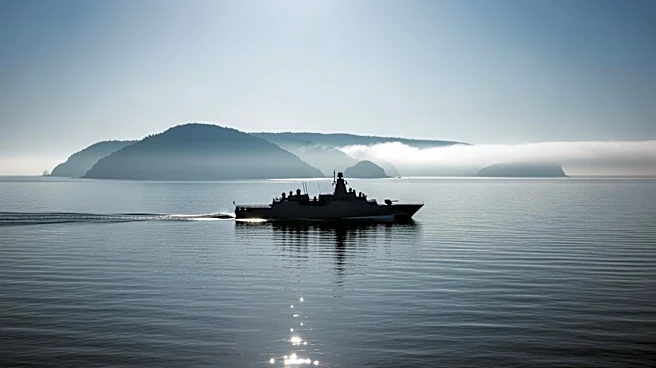
China has conducted live-fire military drills near Luzon Island in response to ongoing military exercises by the United States and the Philippines. The drills, carried out by China's Southern Theater Command, included live-fire shooting, sea-air coordination,
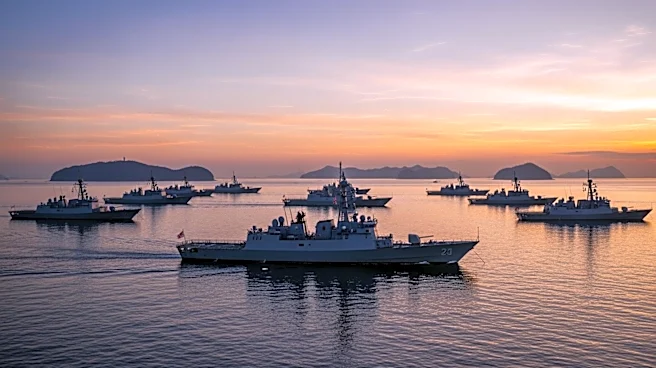
and rapid maneuvers to test joint combat capabilities. These exercises coincide with the annual Balikatan military exercises involving over 17,000 troops from the US, the Philippines, and allies, including Japan. The drills are seen as a response to regional tensions, particularly in the South China Sea, where territorial disputes are ongoing.
Why It's Important?
The military exercises by China and the US-Philippines alliance highlight the ongoing geopolitical tensions in the South China Sea, a critical region for international trade and security. China's actions are viewed as a demonstration of its military capabilities and a warning against perceived encroachments by other nations. The involvement of Japan in the Balikatan exercises marks a significant development, reflecting the growing regional alliances in response to China's assertive policies. These developments could impact regional stability and influence future diplomatic and military strategies in the Asia-Pacific region.
What's Next?
The continuation of military exercises by both China and the US-Philippines alliance suggests that tensions in the region may persist. Diplomatic efforts may be necessary to prevent further escalation and to address the underlying territorial disputes. The international community will likely monitor these developments closely, as they have implications for regional security and international trade routes. Future military engagements and diplomatic negotiations will be critical in shaping the balance of power in the Asia-Pacific region.