




What's Happening?
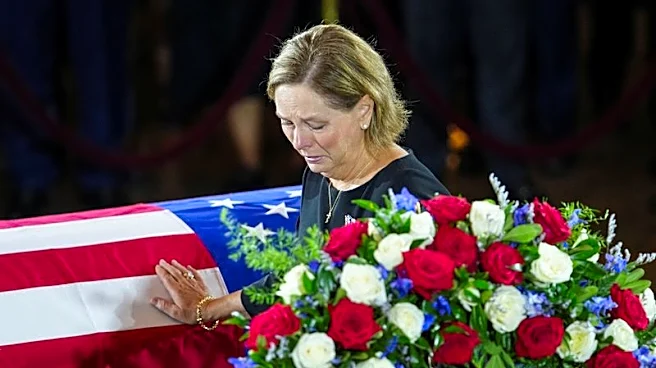
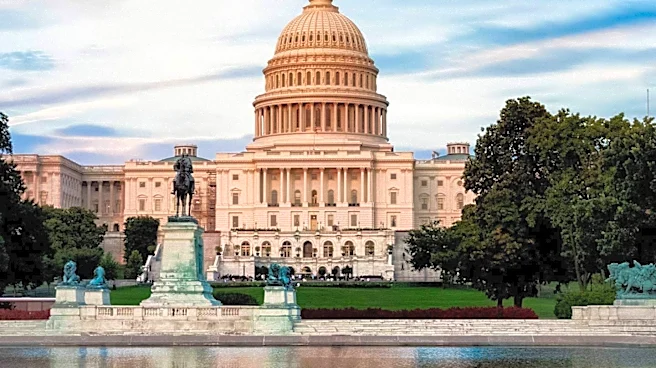
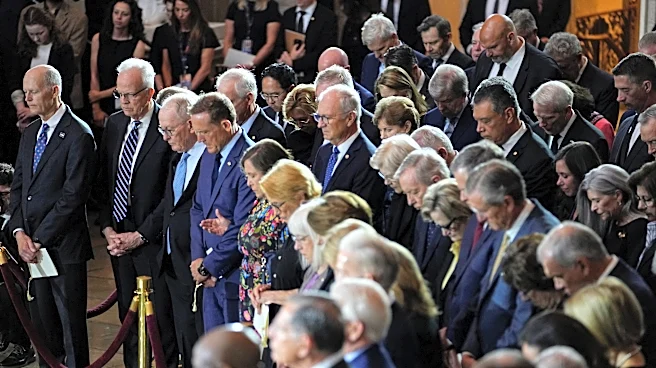
A memorial service was held for Senator Lindsey Graham at the U.S. Capitol, attended by prominent political figures including President Trump. Graham, a Republican from South Carolina, was remembered for his strong advocacy of U.S. foreign policy, particularly
his support for Israel and Ukraine. Known for his interventionist stance, Graham was a key figure in the anti-abortion movement and a staunch ally of President Trump. His career in politics spanned decades, beginning with his election to the House of Representatives in 1994 and later to the Senate in 2002. Graham passed away on July 11, 2026, at the age of 71. His sister, Darline Graham, has been appointed to fill his Senate seat.
Why It's Important?
Lindsey Graham's passing marks the end of an era for a significant political figure who influenced U.S. foreign policy and domestic issues. His support for military interventions and alliances with countries like Israel and Ukraine shaped U.S. international relations. Graham's death leaves a void in the Senate, particularly in the Republican Party, where he was a leading voice on defense and foreign policy. His sister's appointment to his Senate seat suggests continuity in his political legacy, but it also opens up the potential for shifts in policy priorities depending on her approach.
What's Next?
Following the memorial, Graham's legacy will continue to influence U.S. politics, especially through his sister, Darline Graham, who plans to run for a full term in the Senate. The Pentagon's decision to rename Joint Base Charleston in his honor reflects his impact on military policy. The political landscape may see shifts as new leaders emerge to fill the roles Graham played, particularly in foreign policy and defense. The Republican Party will need to navigate the changes in leadership dynamics and policy direction in the wake of his passing.