



What's Happening?
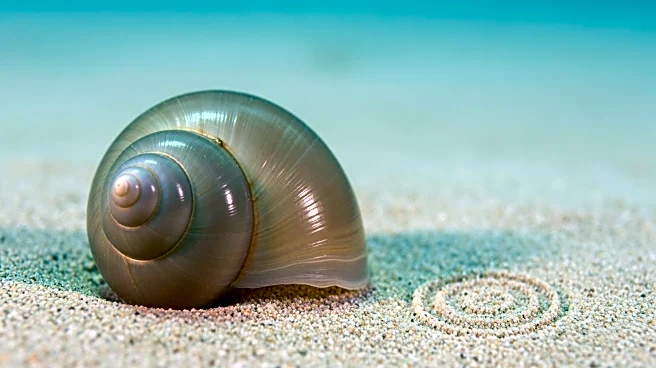
The moon snail, a predatory sea snail from the Naticidae family, has been observed employing a unique method to capture and consume its prey. This snail, often found on strandlines, uses its radula, an organ equipped with multiple teeth, to grind through
the shells of other mollusks like clams and mussels. The process is aided by a chemical cocktail of hydrochloric acid and enzymes, allowing the snail to penetrate the shell and inject digestive fluids, effectively turning the prey into a liquid meal. This method, while time-consuming, ensures the moon snail can consume its prey without competition from other predators.
Why It's Important?
The moon snail's hunting technique highlights the complex interactions within marine ecosystems and the evolutionary adaptations that predators develop to secure food. Understanding these behaviors can provide insights into the ecological balance and the role of predatory species in controlling mollusk populations. This knowledge is crucial for marine biologists and ecologists studying food webs and the impact of predation on biodiversity. Additionally, the moon snail's method of shell penetration could inspire biomimetic applications in technology and materials science, where similar precision and efficiency are desired.