






What's Happening?
Europe is currently experiencing a severe heatwave, with record-breaking temperatures affecting multiple countries. Germany, Czechia, Poland, and Hungary have all reported their hottest days on record within a 24-hour period. Germany recorded a new high
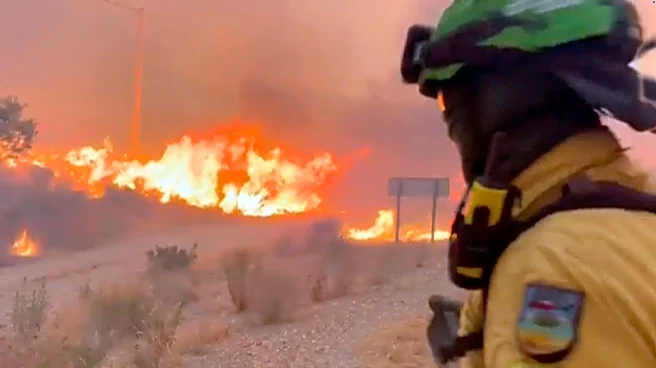
of 107.1 degrees Fahrenheit, while Czechia reached 107.4 degrees Fahrenheit. The heatwave has also led to significant health risks, with over 2,000 deaths reported due to heat-related illnesses. The European Union's Copernicus Climate Change Service confirmed that June was the warmest on record for the region. The heatwave has also resulted in wildfires across Spain, Portugal, and southern France, exacerbating the situation.
Why It's Important?
The heatwave highlights the increasing frequency and intensity of extreme weather events due to climate change. The record temperatures and associated health risks underscore the urgent need for climate adaptation and mitigation strategies. The impact on public health, infrastructure, and emergency services is significant, with countries like France and Spain experiencing severe strain. The situation also raises concerns about the long-term sustainability of current infrastructure and public health systems in the face of such extreme conditions. The economic implications are also notable, as businesses and public services face disruptions.
What's Next?
Countries affected by the heatwave may need to implement more robust climate adaptation measures to cope with future extreme weather events. This could include updating building codes, improving public health responses, and investing in infrastructure that can withstand higher temperatures. Additionally, there may be increased pressure on governments to take more aggressive action on climate change to prevent further escalation of such events. The situation could also lead to increased public awareness and demand for policy changes related to climate action.
Beyond the Headlines
The heatwave serves as a stark reminder of the broader implications of climate change, including its impact on biodiversity, agriculture, and water resources. The increased frequency of such events could lead to long-term shifts in population distribution, as areas become less habitable. There are also ethical considerations regarding the responsibility of developed nations to lead in climate action and support vulnerable regions. The cultural impact is also significant, as traditional ways of life may be disrupted by changing environmental conditions.