
What's Happening?
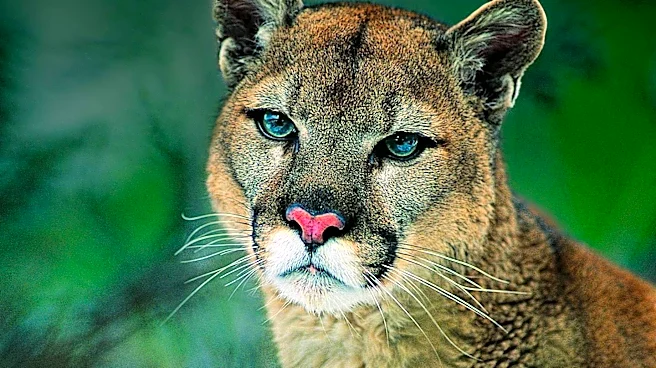
Authorities in San Francisco are investigating multiple possible mountain lion sightings, following an initial report near Fell and Baker on Saturday night. This incident prompted a significant response
from Animal Care and Control and the California Department of Fish and Wildlife. While officials from Fish and Wildlife did not visually confirm a mountain lion on Saturday, they monitored the area. On Sunday, Animal Care and Control initially stated the threat appeared over and believed the animal had left the area. However, later that day, an unconfirmed sighting was reported near 44th and Fulton at 3 p.m. Peter Tira of the California Department of Fish and Wildlife noted that mountain lions typically travel from the Peninsula, where there is a healthy population, and can move through natural habitats like the Panhandle, which connects to Golden Gate Park and extends towards the coast.
Why It's Important?
The repeated mountain lion sightings in urban areas of San Francisco highlight the increasing interface between wildlife and human populations, a growing concern in many U.S. cities bordering natural habitats. This situation poses potential safety risks for residents and pets, leading to heightened public awareness and calls for effective wildlife management strategies. For local authorities, it necessitates a coordinated response involving animal control and wildlife agencies to ensure public safety while also considering the welfare of the animal. The presence of large predators in residential zones can also impact local policies regarding urban development, green spaces, and public education on coexisting with wildlife. The incident underscores the ecological connectivity between urban environments and surrounding natural landscapes, emphasizing the need for conservation efforts that extend beyond protected areas.
What's Next?
Authorities will continue to monitor the areas where mountain lion sightings have been reported and investigate any new leads. The California Department of Fish and Wildlife, in conjunction with Animal Care and Control, will likely maintain increased vigilance and potentially deploy resources to track the animal's movements. Public advisories may be issued to inform residents about safety precautions, such as keeping pets indoors, especially at night, and being aware of their surroundings. Efforts may also focus on educating the public about mountain lion behavior and how to react if an encounter occurs. The long-term strategy will involve assessing the frequency of such incidents and potentially implementing measures to deter wildlife from entering densely populated areas, while also ensuring safe passage for animals through their natural corridors.
Beyond the Headlines
The recurring presence of mountain lions in San Francisco's urban fabric points to broader ecological and environmental shifts. As urban sprawl encroaches on natural habitats, wildlife is increasingly displaced, leading to more frequent encounters with humans. This situation raises ethical questions about how human societies should manage and coexist with wildlife in shared landscapes. It also highlights the importance of preserving and connecting natural corridors, such as the Panhandle and Golden Gate Park, which serve as vital pathways for animals. The incident could spark discussions on urban planning, conservation efforts, and the balance between human development and ecological integrity. It serves as a reminder that even in highly urbanized environments, the wild is never far, and understanding and respecting wildlife behavior is crucial for both human safety and animal welfare.