
What's Happening?
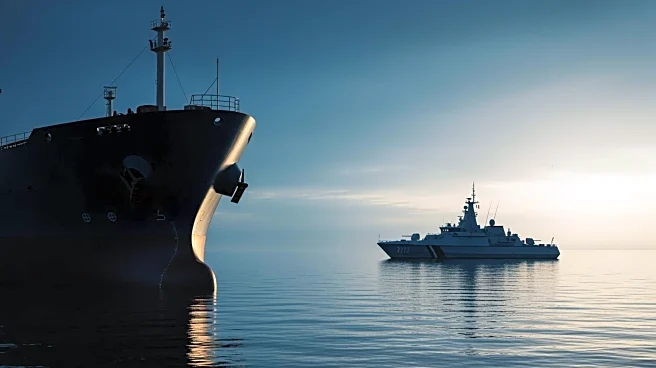
The Trump administration has intensified its efforts to enforce sanctions on Venezuela by implementing a naval blockade targeting oil tankers associated with the South American nation. This move is part
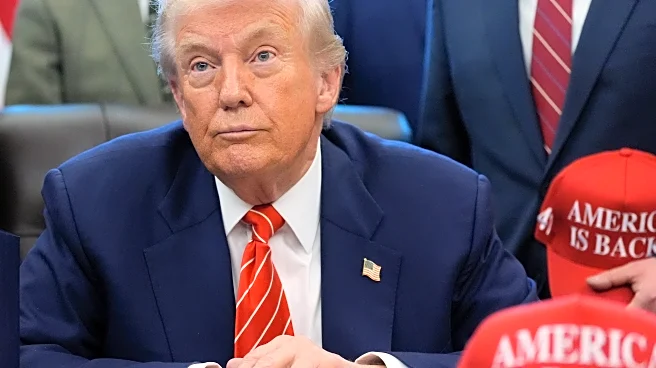
of a broader strategy to curb Venezuela's oil exports, which are crucial for its economy. The blockade aims to prevent sanctioned vessels from entering or leaving Venezuelan waters. President Trump announced this 'total and complete blockade' on his Truth Social account, following the seizure of an oil tanker believed to be part of a 'ghost fleet' used by Venezuela to evade sanctions. These ghost ships employ tactics such as changing names and flags, and disabling tracking systems to obscure their activities. Despite sanctions imposed since 2019, Venezuela has managed to partially recover its oil export levels, indicating the limited effectiveness of these measures.
Why It's Important?
The naval blockade represents a significant escalation in U.S. efforts to pressure the Venezuelan government, led by President Nicolás Maduro. By targeting the oil industry, which is a vital source of revenue for Venezuela, the U.S. aims to weaken Maduro's regime. However, the use of ghost ships and other evasion tactics highlights the challenges in enforcing sanctions. The blockade could further strain U.S.-Venezuela relations and impact global oil markets, as Venezuela holds the world's largest proven oil reserves. Additionally, the blockade raises questions about the legality and humanitarian impact of such measures, potentially affecting international perceptions of U.S. foreign policy.
What's Next?
The continuation of the blockade may lead to increased tensions between the U.S. and Venezuela, with potential diplomatic repercussions. Venezuela might seek support from allies like Russia and China to counteract the blockade's effects. The U.S. could face criticism from international bodies and human rights organizations concerned about the humanitarian impact on the Venezuelan population. Monitoring the effectiveness of the blockade and the response from the international community will be crucial in assessing the long-term implications of this policy.
Beyond the Headlines
The use of ghost ships to evade sanctions is not unique to Venezuela, as similar tactics are employed by other sanctioned nations like Iran and Russia. This trend underscores the complexities of enforcing international sanctions and the need for innovative solutions to address such challenges. The situation also highlights the broader geopolitical dynamics at play, with countries leveraging their oil resources to navigate sanctions and maintain economic stability.