


What's Happening?
The National Oceanic and Atmospheric Administration (NOAA) Space Weather Prediction Center has issued a G3 geomagnetic storm alert for June 5, 2026. This alert indicates that the Northern Lights, a natural light display in the Earth's sky, will be visible
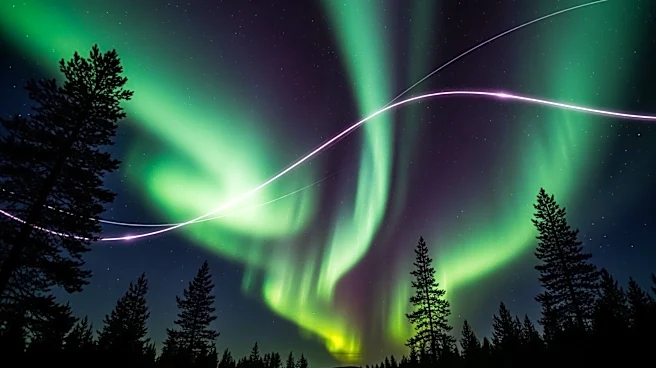
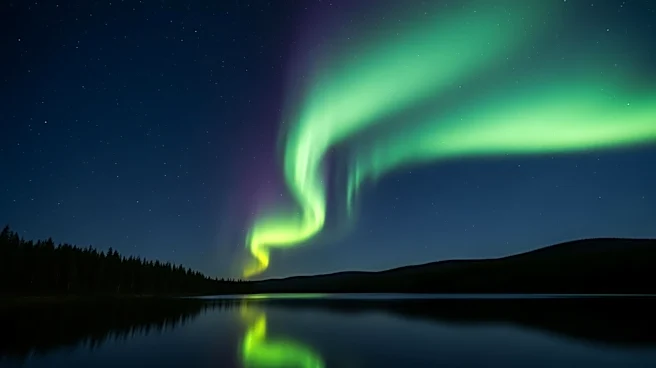
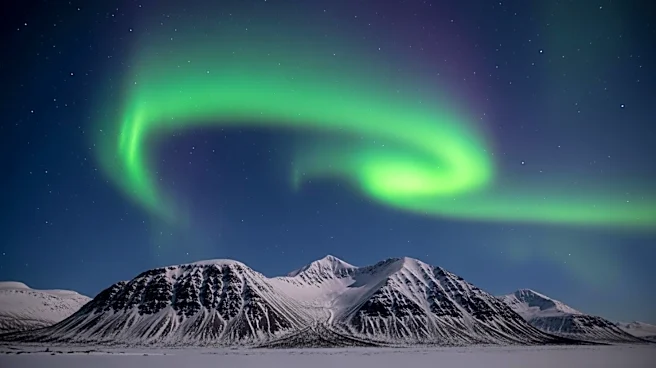
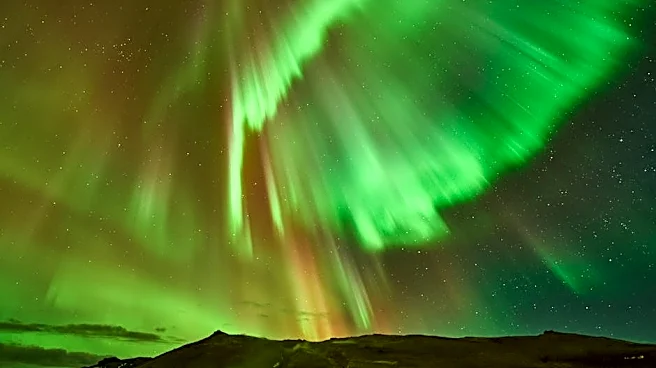
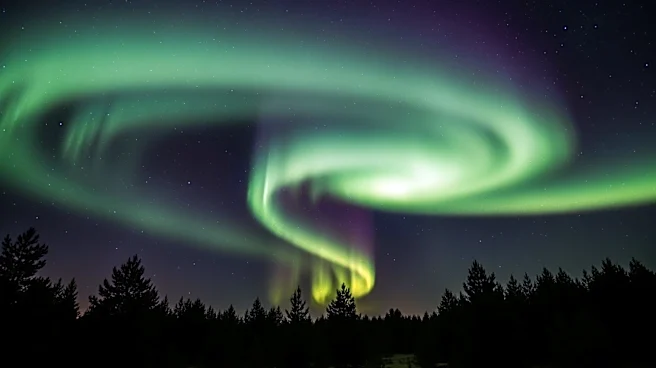
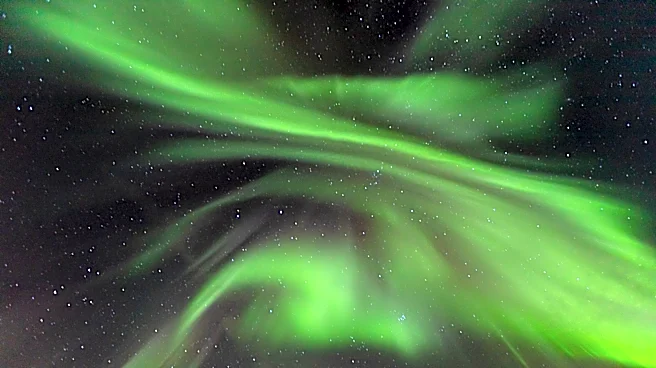
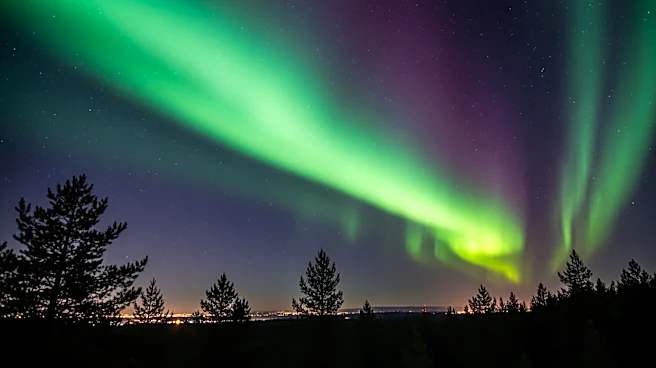
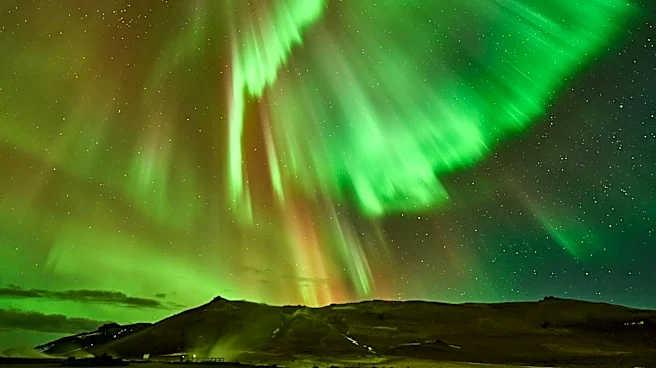
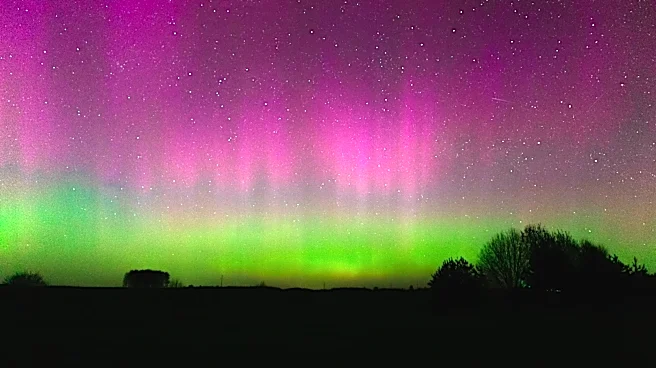
in several U.S. states. The phenomenon occurs when electrically charged particles from space enter the Earth's atmosphere and collide with atmospheric molecules, releasing energy as light. The Northern Lights typically appear faint and pale green but can burst into vibrant shades of neon green, pink, or purple during strong geomagnetic storms. States where the lights are expected to be visible include Alaska, Connecticut, Idaho, Illinois, Indiana, Maine, Massachusetts, Michigan, Minnesota, Montana, Nebraska, New Hampshire, New York, North Dakota, Ohio, Oregon, Pennsylvania, Rhode Island, South Dakota, Vermont, Washington, Wisconsin, and Wyoming. The best viewing times are between 8 p.m. and 11 p.m. on the specified date.
Why It's Important?
The visibility of the Northern Lights across a wide range of U.S. states is a rare and significant event, drawing interest from both amateur and professional astronomers, as well as the general public. This natural spectacle not only provides a unique opportunity for scientific observation and photography but also boosts local tourism in areas where the lights are visible. The event highlights the importance of space weather monitoring and the role of organizations like NOAA in predicting and communicating such phenomena. For communities in the northern U.S., this event can enhance cultural and educational activities related to astronomy and natural sciences.
What's Next?
As the geomagnetic storm progresses, NOAA and other space weather monitoring organizations will continue to provide updates and forecasts. Communities in the affected states may organize viewing events and educational programs to capitalize on the public interest. Additionally, researchers may use this opportunity to study the effects of geomagnetic storms on Earth's atmosphere and magnetic field. The event may also prompt discussions on the impact of space weather on technology and infrastructure, such as satellite operations and power grids.