


What's Happening?
NASA has commenced a new biotechnology investigation aboard the International Space Station, focusing on the manufacturing of blood stem cells in microgravity. This research aims to explore how stem cells self-replicate in weightlessness, potentially
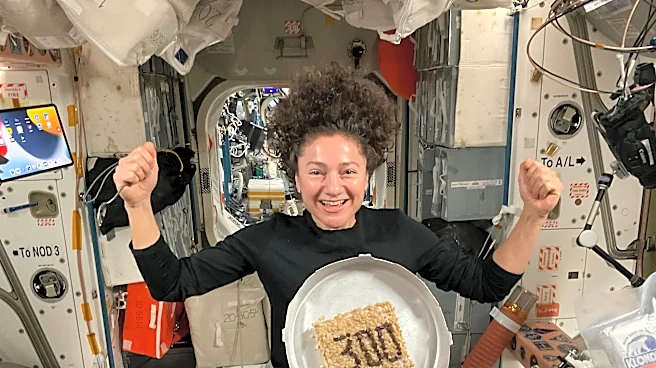
leading to the development of space-designed therapies for cancer and blood disorders. NASA astronaut Jessica Meir, along with ESA flight engineer Sophie Adenot, is actively involved in harvesting and processing stem cell samples within the Kibo laboratory module. The samples are observed using the KERMIT fluorescent microscope and preserved for later analysis. This initiative is part of a broader schedule of microgravity research, which includes installing physics hardware and maintaining life support systems.
Why It's Important?
The research conducted on the International Space Station could significantly impact the field of oncology by providing new insights into stem cell behavior in microgravity. This could lead to the development of innovative treatments for cancer and blood diseases, potentially improving patient outcomes. The unique environment of space offers a distinct advantage for studying biological processes that are difficult to replicate on Earth. Successful outcomes from this research could pave the way for advanced medical therapies and enhance our understanding of cellular processes, benefiting both space exploration and terrestrial medicine.
What's Next?
As the research progresses, the stem cell samples will undergo further analysis to determine their potential for developing new cancer treatments. The findings could influence future biotechnology experiments in space, encouraging more collaborative efforts between international space agencies and medical researchers. Additionally, the results may lead to the refinement of techniques for growing and manipulating stem cells in microgravity, with implications for both space missions and Earth-based medical applications.