



What's Happening?
The Philippines is recognized as the ninth most earthquake-prone country globally, according to a study by UK-based consultancy Utility Bidder. This ranking emphasizes the country's constant exposure to seismic activity due to its location along the Pacific
Ring of Fire. The archipelago is situated between the Philippine Sea Plate and the Eurasian Plate, leading to frequent earthquakes of varying magnitudes. The Philippine Institute of Volcanology and Seismology (PHIVOLCS) reports that the Philippine Sea Plate moves toward the archipelago at about seven centimeters annually, while the Eurasian Plate subducts beneath western Luzon and Mindoro at about three centimeters per year. This tectonic interaction results in significant seismic activity, with the country experiencing an average of 20 to 30 earthquakes daily.
Why It's Important?
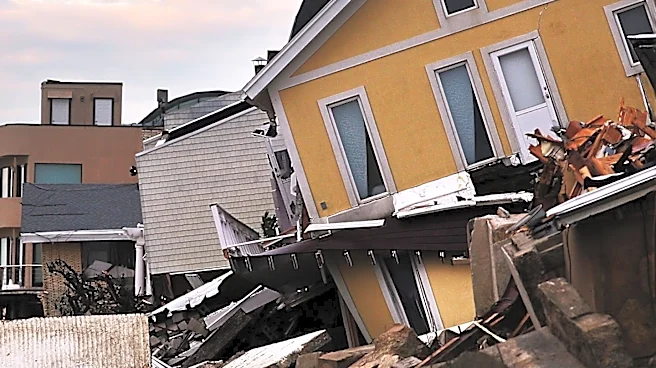
The high seismic activity in the Philippines poses a significant risk to its infrastructure and population. Earthquakes can cause severe damage, including the collapse of buildings, damage to roads and bridges, and potential tsunamis. The country's vulnerability necessitates robust earthquake preparedness measures to mitigate the impact of such natural disasters. The frequent seismic events underscore the importance of continuous monitoring and public awareness to ensure safety and minimize casualties. The economic implications are also considerable, as infrastructure damage can disrupt daily life and economic activities, affecting both local and national economies.
What's Next?
The Philippines must continue to enhance its earthquake preparedness strategies, including public education on safety measures and the development of resilient infrastructure. PHIVOLCS plays a crucial role in monitoring seismic activity and providing timely information to the public. Future efforts may focus on improving building codes, conducting regular earthquake drills, and investing in technology to better predict and respond to seismic events. Collaboration with international experts and organizations could also provide valuable insights and resources to strengthen the country's preparedness and response capabilities.
Beyond the Headlines
The cultural and historical context of earthquakes in the Philippines reveals a long-standing relationship with seismic activity. Ancient civilizations had various explanations for earthquakes, reflecting the human quest to understand natural phenomena. Today, scientific advancements have provided a clearer understanding of tectonic movements, yet the challenge remains to effectively communicate and implement safety measures across diverse communities. The ongoing threat of earthquakes also highlights the need for sustainable urban planning and development that considers environmental risks.