


What's Happening?
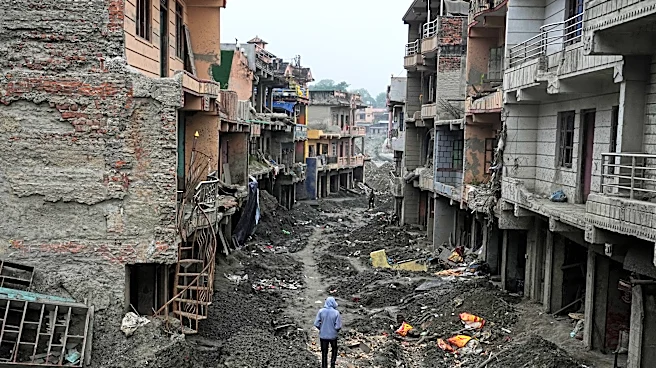
By September 2025, Pakistan experienced severe monsoon flooding, resulting in at least 1,006 fatalities and the rescue or evacuation of over three million people. Regions such as Punjab and Khyber Pakhtunkhwa were among the most heavily affected. This
follows the devastating 2022 floods, which caused over 1,700 deaths and inundated approximately one-third of the country, leading to damages and economic losses exceeding $30 billion. The repeated nature of these disasters highlights Pakistan's ongoing climate vulnerability, indicating that these events are not temporary emergencies but rather an increasingly consistent challenge. Despite Pakistan contributing less than one percent of global greenhouse gas emissions, it bears a disproportionate burden of climate change impacts. The international community's response to these crises, particularly regarding climate finance, has been criticized for not matching pledges with actual disbursements, leaving Pakistan to largely finance its own recovery through additional borrowing.
Why It's Important?
The persistent flooding in Pakistan underscores a critical global issue of climate justice, where countries with minimal contributions to climate change suffer severe consequences. This situation tests the international climate order's commitment to differentiated responsibility. The financial burden on Pakistan is immense; the country faces substantial debt repayment obligations alongside the costs of recovery and reconstruction. The reliance on loans for climate finance, even those labeled 'green,' traps Pakistan in a cycle of borrowing to rebuild. This impacts its ability to invest in essential protective infrastructure like embankments and drainage systems, diverting funds towards debt servicing instead. The inadequacy of international climate funds, such as the Loss and Damage Fund, further exacerbates the problem, as initial allocations are a fraction of the actual losses incurred by vulnerable nations.
What's Next?
Pakistan is urged to pursue a three-pronged agenda for climate justice. First, it must demand predictable, timely, and grant-based climate finance delivered through accessible mechanisms. Second, strengthening cooperation with other climate-vulnerable and debt-burdened countries is crucial to advance demands for disaster-linked debt suspension clauses and debt-for-adaptation arrangements. Third, Pakistan needs to demonstrate domestic seriousness through measurable reforms, including strict enforcement of land-use regulations, increased investment in early warning systems, and transparent reporting on public resource utilization. Diplomatically, Pakistan aims to leverage the International Court of Justice's 2025 advisory opinion on states' climate change obligations to strengthen its case for greater financial responsibility from major emitters.
Beyond the Headlines
The ongoing climate crisis in Pakistan reveals deeper systemic issues within the international climate framework. The legal landscape surrounding climate compensation remains complex, with the Paris Agreement's provisions on loss and damage not explicitly providing a basis for liability. This makes legal pursuit of compensation challenging for vulnerable nations. Furthermore, the concept of climate adaptation needs to be integrated into national development planning rather than remaining an add-on to donor-supported programs. The repeated failures in disaster preparedness and institutional capacity to protect vulnerable communities, as seen in the 2025 Khyber Pakhtunkhwa floods, highlight the urgent need for internal reforms. The ethical dimension questions whether a country already struggling with climate disasters should be forced to finance its recovery through additional borrowing, perpetuating a cycle of debt and vulnerability.