
What's Happening?
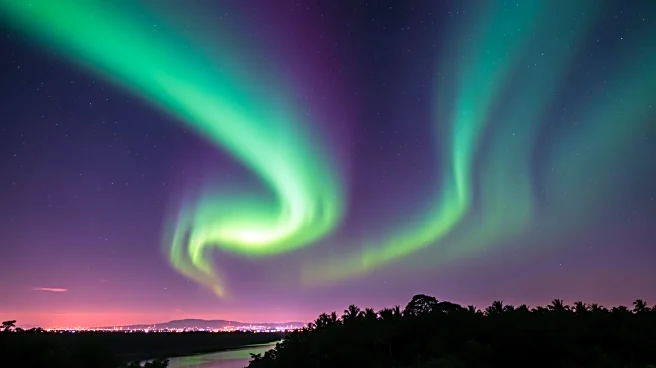
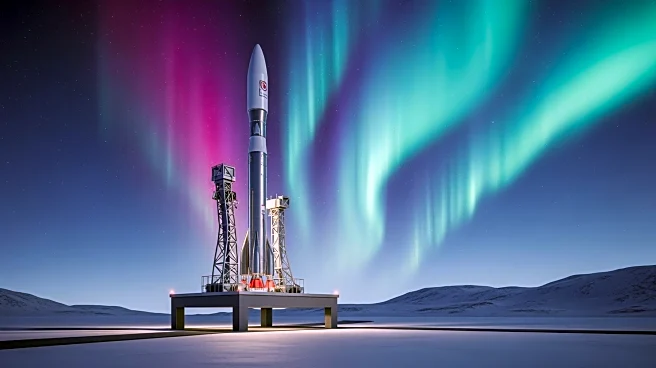
The Poker Flat Research Range in Alaska has commenced its 2026 launch season with three missions aimed at studying the aurora and the upper atmosphere. The first mission, PolarNOx, launched on Friday morning,
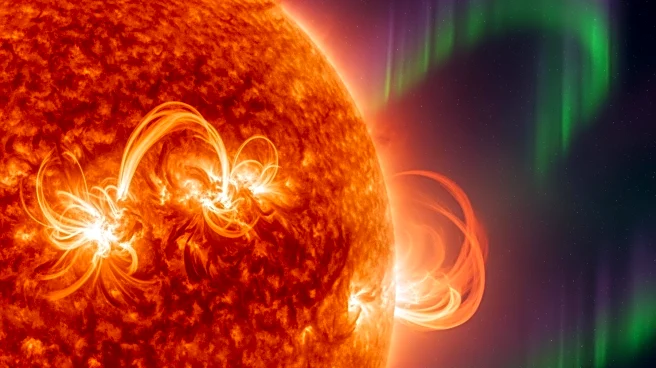
focuses on measuring aurora-produced nitric oxide in the upper atmosphere. This mission, led by engineering professor Scott Bailey from Virginia Tech, uses a NASA BlackBrant IX rocket to carry instruments that will map nitric oxide distribution by observing starlight changes. Two additional missions are scheduled, including the Geophysical Non-Equilibrium Ionospheric System Science (GNEISS) mission, which will launch two rockets to study ionospheric disturbances, and the Black and Diffuse Aurora Science Surveyor (BaDASS) mission, which aims to understand black auroras. These missions are part of a broader effort to enhance understanding of how the sun interacts with Earth's magnetosphere and the physics driving auroral phenomena.
Why It's Important?
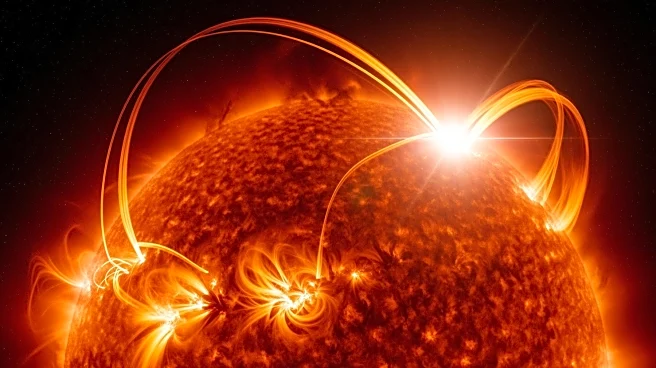
These missions are crucial for advancing scientific knowledge about the Earth's upper atmosphere and the aurora, which have significant implications for understanding space weather and its effects on satellite communications and navigation systems. The data collected could provide insights into how auroral activity influences atmospheric chemistry, particularly the production of nitric oxide, which can affect the ozone layer. Understanding ionospheric disturbances is also vital for improving the reliability of communication and navigation systems that rely on satellite signals. The research conducted at Poker Flat contributes to global efforts to monitor and predict space weather, which is increasingly important as society becomes more dependent on technology vulnerable to such phenomena.
What's Next?
The upcoming launches of the GNEISS and BaDASS missions are scheduled between February 7 and 20. These missions will continue to gather data on ionospheric disturbances and black auroras, respectively. The findings from these missions will be analyzed and compared with optical data from ground-based cameras across Alaska. The results are expected to enhance the scientific community's understanding of auroral processes and their impact on the Earth's atmosphere. Continued collaboration between the University of Alaska Fairbanks, NASA, and other research institutions will likely lead to further studies and potential technological advancements in monitoring and mitigating the effects of space weather.