






What's Happening?
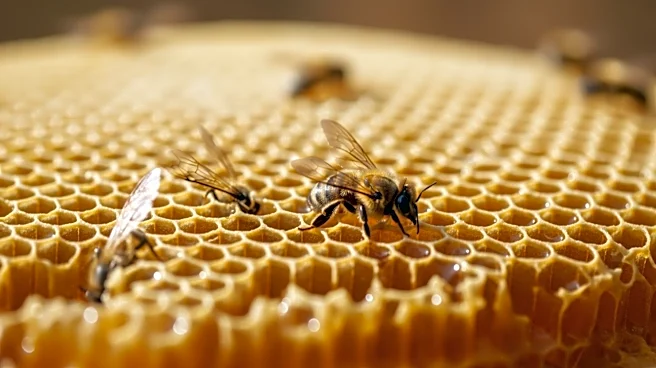
Researchers have discovered that a hybrid honeybee population in Southern California has evolved a natural defense against the Varroa destructor mite, a significant parasite affecting bee colonies. This hybrid population, a genetic mix of various lineages,
can suppress Varroa levels without chemical treatments. The study, conducted by Genesis Chong-Echavez and Professor Boris Baer, monitored 236 honeybee colonies from 2019 to 2022. It found that colonies led by Californian hybrid queens had significantly fewer mites compared to those led by commercial queens. The resistance appears to be linked to the bees' early development stages, suggesting a genetic basis for this defense mechanism.
Why It's Important?
The findings offer potential new strategies for protecting honeybee populations, which are crucial for pollination and agriculture. Varroa mites weaken bees by feeding on their fat body tissue, leading to increased vulnerability to viruses. Current chemical treatments are losing effectiveness, making this natural resistance a promising alternative. The study highlights the importance of genetic diversity in developing resilience against pests, which could reduce reliance on chemical treatments and improve bee health. This could have significant implications for the agricultural industry, particularly in regions heavily reliant on pollination.