


What's Happening?
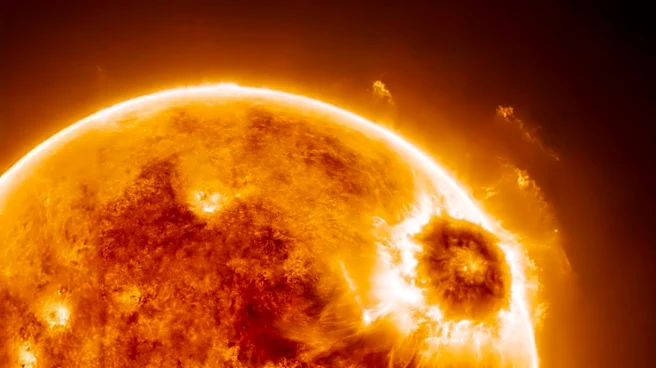
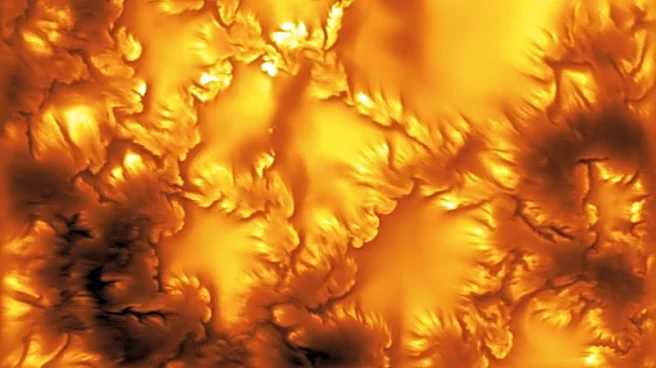
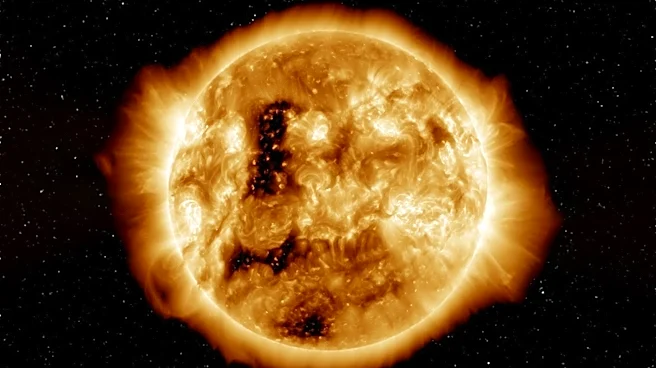
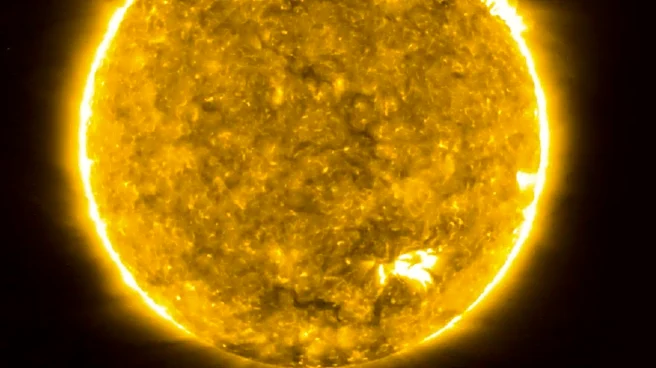
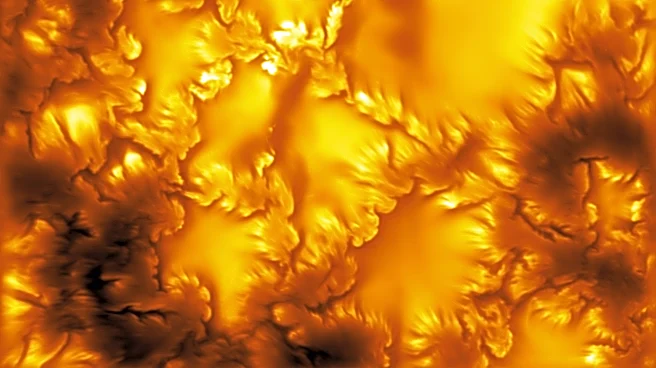
Scientists have captured the most detailed images yet of the sun's surface using the Daniel K. Inouye Solar Telescope in Hawaii. These images reveal thousands of tiny whirlpools, known as Kelvin-Helmholtz instabilities, on the sun's surface. This phenomenon,
predicted over 150 years ago, occurs when two fluids slide past each other at different speeds, creating spiraling patterns. The discovery provides new insights into the sun's behavior, potentially explaining the mechanisms behind solar flares and coronal mass ejections. The findings were published in the journal Nature.
Why It's Important?
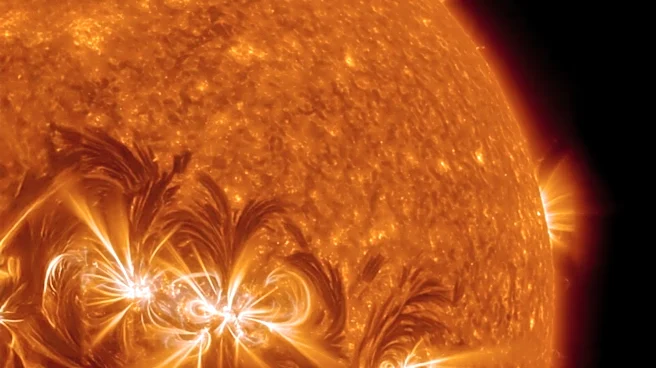
The discovery of Kelvin-Helmholtz instabilities on the sun's surface is significant for understanding solar dynamics. These vortices may play a crucial role in the sun's magnetic activity, contributing to solar flares and coronal mass ejections that can impact Earth's satellites, communications, and power grids. Understanding these processes is vital for predicting space weather and mitigating its effects on technology and infrastructure. The research also addresses the longstanding mystery of why the sun's corona is much hotter than its surface, offering potential explanations for this temperature discrepancy.
What's Next?
Researchers plan to use computer simulations to track these vortices in future observations, aiming to quantify their contribution to solar heating and space weather. This ongoing research could lead to improved models for predicting solar activity and its impact on Earth. As the study of the sun continues, these findings may inform the development of technologies and strategies to protect critical infrastructure from solar-induced disruptions.