
What's Happening?
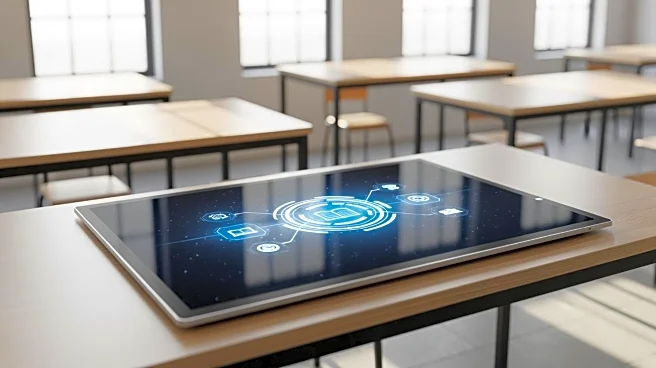
Higher education institutions are increasingly adopting interactive flat panels to replace traditional projector-based systems in classrooms. This shift is driven by the need to accommodate HyFlex learning
environments, which require seamless integration of in-person and remote instruction. Interactive flat panels allow remote students to experience the same instructional content as those attending in person, as these panels can appear as attendees in virtual meetings, displaying content clearly and in real time. The transition to flat panels is also motivated by cost considerations, as they are more affordable and easier to manage than complex projector setups. The plug-and-play nature of flat panels reduces the need for extensive programming and maintenance, freeing up IT resources and simplifying operations for faculty members.
Why It's Important?
The move towards interactive flat panels in higher education is significant as it addresses both financial and educational challenges. With tight budgets, educational institutions are under pressure to optimize costs while maintaining or enhancing the quality of education. By adopting more affordable and user-friendly technology, schools can allocate resources more effectively, potentially investing savings in other critical areas. Additionally, the ability to deliver a consistent educational experience to both in-person and remote students is crucial in the current educational landscape, where flexibility and accessibility are increasingly important. This technological shift not only supports the evolving needs of students and educators but also positions institutions to better handle future educational demands.
What's Next?
As more institutions adopt interactive flat panels, there may be further developments in the integration of these systems with other educational technologies. Schools might explore additional features or software that enhance the interactivity and engagement of remote learning. Furthermore, the success of these implementations could influence other sectors to consider similar technological upgrades. Stakeholders, including IT teams and faculty, will likely continue to evaluate the effectiveness of these systems and seek feedback to refine their use. The ongoing evolution of educational technology will require continuous adaptation and training to ensure that both educators and students can fully benefit from these advancements.