






What's Happening?
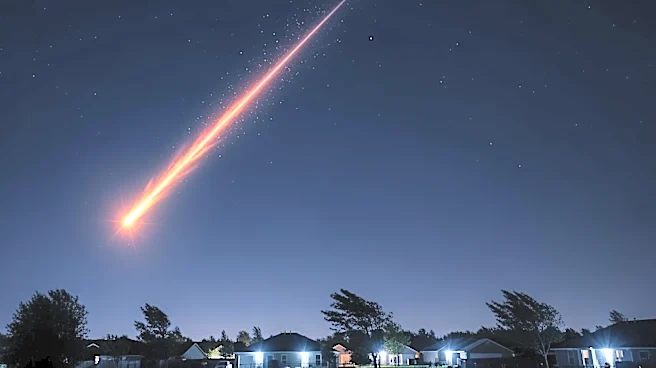
On Saturday afternoon, residents across New England reported hearing explosive booms that shook buildings in Massachusetts and Rhode Island. The American Meteor Society confirmed that these sounds were caused by a meteor approximately three feet wide
entering the atmosphere near the New Hampshire-Massachusetts border. The meteor, described as a large fireball resembling a shooting star in the daytime sky, was unlikely to have struck the ground, according to Robert Lunsford, a fire program monitor. Reports of the event were received from Delaware to Montreal, with many people experiencing the ground shaking or witnessing the fireball. The U.S. Geological Survey received numerous reports of shaking, but confirmed that the event was not an earthquake.
Why It's Important?
The meteor event highlights the unpredictable nature of celestial phenomena and their potential impact on populated areas. While the meteor did not cause any physical damage, the widespread reports of shaking and explosive sounds underscore the need for effective communication and preparedness for such events. This incident also serves as a reminder of the importance of scientific monitoring and public awareness regarding meteors and other atmospheric occurrences. The event's coverage across multiple states demonstrates the interconnectedness of regional emergency response systems and the role of organizations like the American Meteor Society in providing timely information.
What's Next?
Further analysis of the meteor's trajectory and speed may provide more insights into its behavior and potential landing site, if it did not burn up completely. Agencies like the American Meteor Society and the U.S. Geological Survey may continue to gather data from witnesses to refine their understanding of the event. Additionally, this incident may prompt discussions on improving public awareness and preparedness for similar occurrences in the future, potentially leading to enhanced monitoring systems and educational initiatives.
Beyond the Headlines
The meteor event raises questions about the frequency and potential risks of such occurrences in populated areas. While meteors are common, large fireballs that cause noticeable effects are rarer and can lead to public concern. This incident may encourage further research into the atmospheric entry of meteors and their potential impacts on infrastructure and safety. It also highlights the importance of collaboration between scientific organizations and emergency response agencies in managing public perception and ensuring accurate information dissemination.