




What's Happening?
The FDA Food Code mandates specific two-stage cooling rules for cooked Time/Temperature Control for Safety (TCS) food to prevent bacterial growth. Food must cool from 135°F to 70°F within two hours, and then to 41°F or lower within a total of six hours.
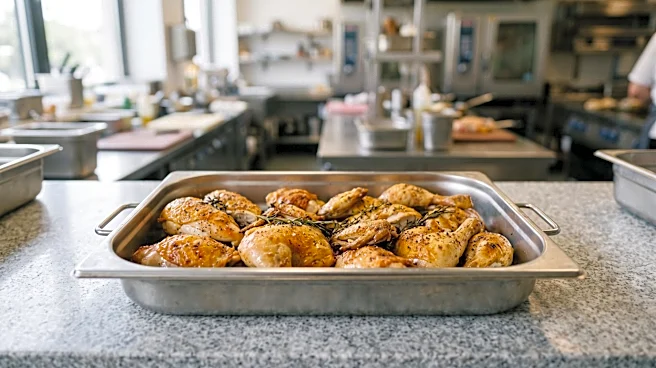
Approved methods for rapid cooling include dividing food into shallow pans or smaller portions to increase surface area, using an ice water bath with stirring to draw heat out faster, cutting large solid items into smaller pieces, or utilizing a blast chiller. Conversely, practices like covering hot food tightly, allowing food to cool on a prep table first, or cooling one large, deep pot as a single mass are not recommended as they slow the cooling process beyond safe limits. If the cooling window is missed, many health departments advise reheating the food to 165°F for 15 seconds and restarting the cooling process with a different method, or discarding it.
Why It's Important?
Adherence to these FDA Food Code guidelines is crucial for public health and food safety in the U.S. foodservice industry. Improper cooling is a leading cause of foodborne illnesses, as bacteria can multiply rapidly in the 'temperature danger zone' (41°F to 135°F). By providing clear, science-based methods, the FDA aims to minimize the risk of pathogen growth in cooked foods, protecting consumers from potential health hazards. For businesses, compliance with these regulations is essential to pass health inspections, maintain reputation, and avoid legal liabilities associated with foodborne outbreaks. Understanding and implementing these cooling techniques directly impacts operational efficiency, food waste management, and ultimately, the financial stability of restaurants, catering services, and other food establishments across the nation.
What's Next?
Foodservice establishments are expected to continue implementing and refining their cooling procedures to align with FDA Food Code standards and local health department regulations. Ongoing training for kitchen staff on proper cooling techniques, temperature monitoring, and corrective actions will remain critical. The industry may see further development and adoption of rapid cooling equipment, such as advanced blast chillers, to meet these stringent requirements more efficiently. Health inspectors will continue to enforce these rules, with potential for stricter oversight in areas where foodborne illness outbreaks are linked to improper cooling. Businesses that consistently fail to meet these standards could face penalties, including fines, temporary closures, or loss of operating permits, driving a continuous need for vigilance and adaptation in food safety practices.
Beyond the Headlines
The FDA's detailed cooling guidelines reflect a broader commitment to public health infrastructure and preventative measures against widespread illness. Beyond the immediate impact on food safety, these regulations influence the design of commercial kitchens, the types of equipment purchased, and the operational workflows within the foodservice sector. They also highlight the scientific principles behind food preservation, emphasizing the importance of temperature control in inhibiting microbial growth. The continuous evolution of these codes underscores the dynamic nature of food science and public health, adapting to new research and understanding of foodborne pathogens. This regulatory framework also subtly shapes consumer expectations regarding food safety, fostering a general trust in the food supply chain, which is a cornerstone of public confidence in the U.S. food industry.