


What's Happening?
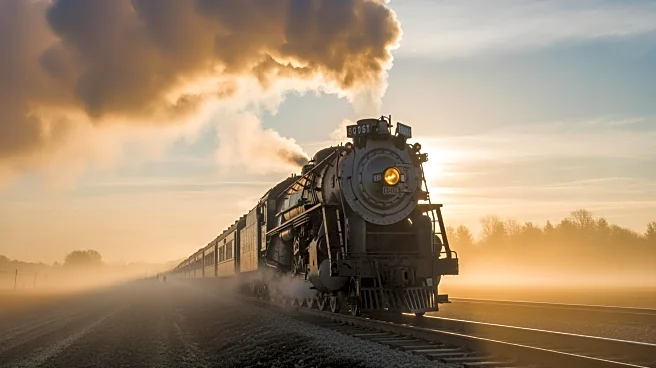
The Union Pacific's Big Boy locomotive, a 1941 steam engine and the largest running example of its kind, is set to embark on its first cross-continental tour. The locomotive, which originally served for approximately 20 years hauling freight, is now reborn
as a patriotic symbol for the United States' 250th anniversary. The tour will take Big Boy from Wyoming to California and later to Philadelphia by Independence Day. The locomotive's name originated from an unknown worker who chalked 'Big Boy' on its smokebox, acknowledging its immense size. The tour has attracted rail fans from across the country, eager to witness the historic journey of this iconic steam engine.
Why It's Important?
The Big Boy locomotive's tour is significant as it represents a piece of American history and engineering prowess. As a symbol of the nation's industrial heritage, the locomotive's journey across the country serves as a reminder of the technological advancements that have shaped the U.S. economy. The tour also highlights the enduring interest in steam engines and their role in the development of the nation's rail infrastructure. For Union Pacific, this event is an opportunity to showcase its historical assets and engage with rail enthusiasts and the general public, fostering a sense of national pride and unity.
What's Next?
As Big Boy continues its tour, it is expected to draw large crowds at each stop, with enthusiasts tracking its progress online. Union Pacific will likely continue to leverage this event to promote its historical significance and engage with communities across the country. The tour may also inspire renewed interest in preserving and celebrating other historical locomotives and rail infrastructure. Additionally, the successful execution of this tour could lead to more such events in the future, further cementing the role of historical rail assets in American culture.
Beyond the Headlines
The Big Boy tour underscores the cultural and historical value of preserving industrial artifacts. It raises questions about the importance of maintaining and celebrating historical technology in a rapidly advancing world. The event also highlights the community aspect of rail fandom, where enthusiasts from diverse backgrounds come together to celebrate a shared interest. This tour could potentially influence discussions on heritage conservation and the role of historical education in fostering national identity.