





What's Happening?
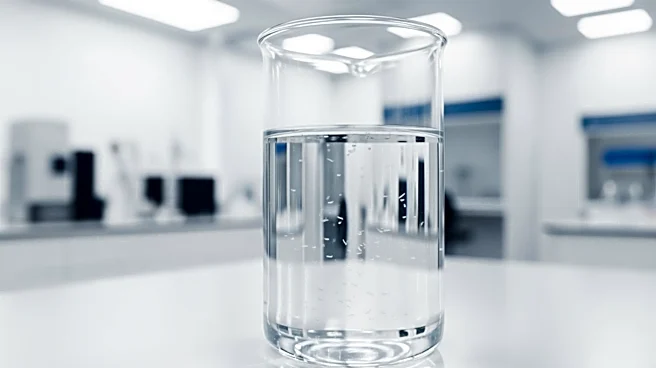
Microplastics have been found in various environments, including human tissues, raising concerns about contamination in research laboratories. Scientists are implementing stricter protocols to ensure the accuracy of their findings, as microplastics are present
in lab equipment and environments. The U.S. government has announced plans to prioritize research on microplastics, highlighting the need for reliable data to understand their impact on human health and the environment. Researchers are adopting contamination controls from forensic science to differentiate between genuine findings and artifacts introduced during experiments.
Why It's Important?
The presence of microplastics in human tissues and the environment poses potential health risks, making it crucial to understand their effects. Accurate research is essential for developing regulations and public health policies. The credibility of scientific findings is at stake, as contamination could lead to misleading conclusions. The federal government's involvement underscores the significance of addressing microplastics, which could impact industries related to plastics production and waste management. Ensuring research integrity is vital for informed decision-making and protecting public health.
What's Next?
The U.S. government's focus on microplastics research may lead to increased funding and collaboration among scientists to refine methodologies and reduce contamination. This could result in more comprehensive studies on the health effects of microplastics, influencing future regulations. Researchers may continue to adopt and develop new protocols to minimize contamination, potentially leading to standardized practices across different scientific disciplines. The findings could drive changes in consumer products and packaging, as well as influence public awareness and behavior regarding plastic use.
Beyond the Headlines
The issue of microplastics contamination in research highlights broader challenges in scientific integrity and the need for interdisciplinary collaboration. As microplastics research evolves, it may prompt a reevaluation of laboratory practices and materials, encouraging a shift towards more sustainable and less contaminating alternatives. The scrutiny on microplastics could also lead to increased public and regulatory pressure on industries to reduce plastic production and improve waste management. This development reflects a growing awareness of environmental and health issues associated with plastic pollution.