







What's Happening?
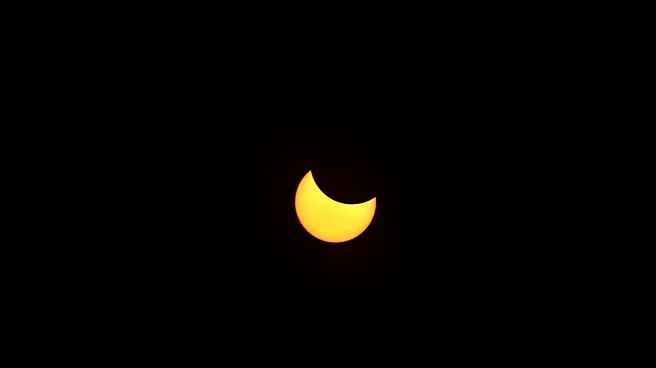
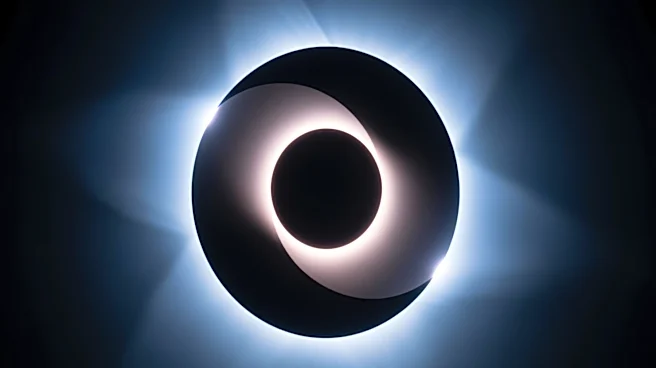
On August 12, 2026, a total solar eclipse will occur, with the Moon perfectly aligning between Earth and the Sun. This celestial event will cast a shadow over parts of Spain, Iceland, Greenland, and Russia, creating a brief period of daytime twilight.
The eclipse's path of totality will stretch over 5,000 miles from the Arctic to the Mediterranean, offering a spectacular view for those within the 180-mile-wide band. The eclipse will begin in northeastern Russia, move across Greenland, clip Iceland, and end near the Balearic Islands. The total eclipse will last a maximum of two minutes and 18 seconds, with the longest viewing time over the ocean near Iceland.
Why It's Important?
This event marks the first total solar eclipse visible from mainland Europe since 1999, drawing millions of skywatchers and tourists to the region. The eclipse provides a unique opportunity for scientific observation and public engagement with astronomy. Economically, it is expected to boost tourism in the regions along the path of totality, as travelers flock to witness the rare phenomenon. The event also highlights the importance of international collaboration in scientific research and public education about celestial events.
What's Next?
As the date approaches, preparations are underway in the affected regions to accommodate the influx of tourists and ensure public safety during the eclipse. Local governments and tourism boards are likely to organize viewing events and educational programs to enhance the experience for visitors. Scientists will also prepare to conduct studies on the Sun's corona and other astronomical phenomena during the eclipse. The next total solar eclipse in the region is expected in 2027, offering a longer period of darkness and different viewing conditions.