







What's Happening?
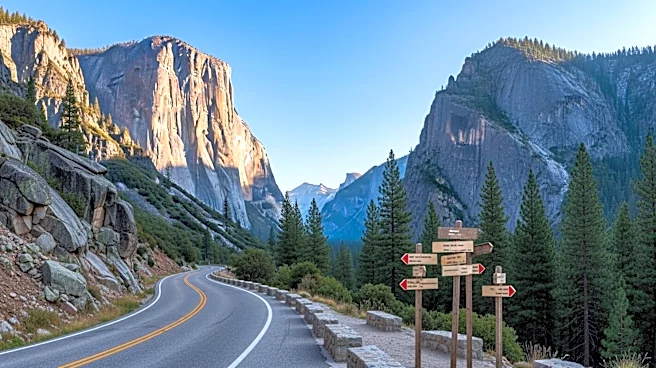
Yosemite National Park experienced significant traffic congestion and long entrance lines over the Memorial Day weekend after the National Park Service (NPS) ended its reservation system. This system, which was previously used to manage crowd sizes, was discontinued
following an evaluation by the NPS. The removal of the reservation requirement led to a surge in visitors, resulting in hours-long traffic jams and packed parking areas. The park, which is California's most visited national park, was already seeing a record number of visitors even before the summer season began. The decision to end the reservation system was defended by Yosemite Superintendent Ray McPadden, who stated that a season-wide reservation requirement was not deemed the most effective approach for 2026. Instead, the park has shifted to strategies like real-time traffic monitoring and active parking management.
Why It's Important?
The decision to end the reservation system at Yosemite National Park has significant implications for visitor experience and park management. The surge in visitors without the reservation system has led to severe congestion, which could deter tourists and impact the local economy that relies on tourism. The park's ability to handle large crowds is crucial, as it is a major attraction in California, drawing millions of visitors annually. The situation highlights the challenges faced by national parks in managing increasing visitor numbers while maintaining a quality experience. Additionally, the park's staffing issues, as noted by the National Parks Conservation Association, could exacerbate the situation, affecting the park's operations and visitor safety.
What's Next?
In response to the travel chaos, Yosemite National Park may need to reassess its crowd management strategies. The park's current approach, which includes real-time traffic monitoring and active parking management, will be tested in the coming months as the summer season progresses. If congestion continues to be a problem, the park may consider reinstating some form of reservation system or implementing additional measures to control visitor numbers. The situation also calls for increased funding and staffing for national parks to handle the growing number of visitors effectively. Stakeholders, including local businesses and tourism operators, will be closely monitoring the park's management strategies and their impact on visitor satisfaction and economic benefits.