
What's Happening?
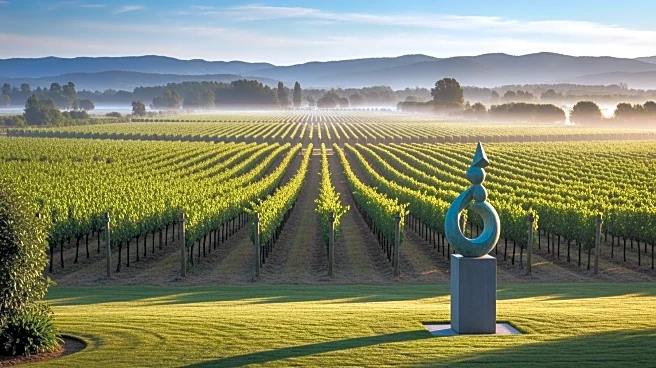
The di Rosa Center for Contemporary Art, located in Napa Valley, California, has announced the sale of its 217-acre property for $10.9 million. The estate includes gallery buildings, a historic residence,
and vineyards, but notably, the art collection itself is not part of the sale. The center has faced financial difficulties, prompting significant changes such as scaling back programming, reducing staff, and prioritizing wedding rentals to generate revenue. Despite these efforts, the center continues to explore options to maintain public access to its galleries and outdoor art collection, which features works by notable artists like Mark di Suvero and Robert Arneson. The center's executive director, Kate Eilertsen, expressed hope for a philanthropist to purchase the property and lease it back to the center at a nominal rate, allowing it to continue its mission.
Why It's Important?
The sale of the di Rosa Center's property highlights the financial challenges faced by art institutions, particularly in the Bay Area. The center's struggles are emblematic of broader issues within the art community, where institutions are grappling with funding shortages and operational costs. The potential sale could impact the local cultural landscape, as the center is known for its rich collection of Bay Area artists' works. The outcome of this sale could set a precedent for how similar institutions manage financial difficulties, potentially influencing public policy and philanthropic support for the arts. Stakeholders, including local artists and art enthusiasts, may be affected by changes in access to the center's resources and programming.
What's Next?
As the di Rosa Center navigates the sale process, it is exploring partnerships with organizations like the Napa County Open Space District to expand public access to the property. The center is also seeking a mission-aligned buyer interested in collaborating to preserve its cultural offerings. Meanwhile, the center's Napa Valley campus and its San Francisco gallery will remain open. The art community and potential buyers will be closely watching the sale's progress, as it could influence future decisions regarding the preservation and accessibility of art collections in financially strained institutions.