




What's Happening?
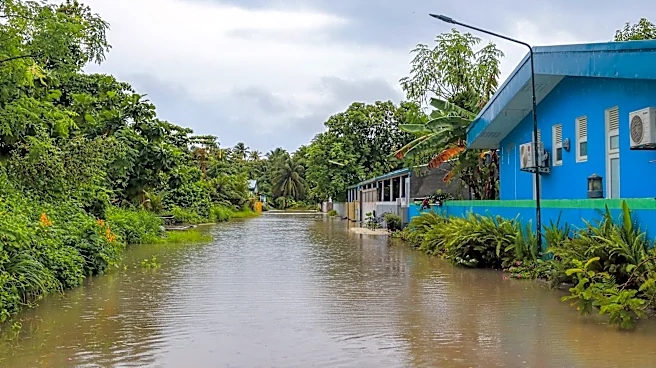
Hawaii is facing the threat of more severe deluges and potential flash flooding, just weeks after experiencing record-breaking rainfall. Flood watches have been issued for the entire state from Wednesday morning through Friday afternoon. The region is still
recovering from previous storms, and the saturated grounds increase the risk of landslides, road closures, and property damage. The worst downpours are expected to occur late Thursday and Friday. Governor Josh Green has initiated a disaster case management program for affected residents, while awaiting federal assistance. The atmospheric conditions contributing to this situation include a developing triplet cyclone pattern in the West Pacific, which is linked to a possible super El Niño.
Why It's Important?
The impending storms pose significant challenges for Hawaii, which is still dealing with the aftermath of previous flooding. The potential for additional damage could strain local resources and infrastructure, impacting residents and businesses. The economic implications are substantial, with damage from the March storms already estimated to exceed $1 billion. The situation underscores the vulnerability of the state to extreme weather events, which are becoming more frequent due to climate change. The ongoing recovery efforts and the need for federal aid highlight the importance of disaster preparedness and response strategies in mitigating the impact of such events.
What's Next?
As Hawaii braces for more heavy rainfall, local authorities and residents are preparing for possible emergency situations. The flood risk is expected to peak from Thursday night through Friday, with conditions potentially easing by Saturday morning. Rainfall amounts of 3 to 6 inches are forecast across much of the state, with localized totals exceeding 6 inches in higher terrain. The unsettled weather is predicted to continue into early next week, necessitating ongoing vigilance and preparedness. The state government and local agencies are likely to continue coordinating relief efforts and assessing the need for further assistance.
Beyond the Headlines
The situation in Hawaii highlights broader environmental and climate-related challenges. The increasing frequency and intensity of storms in the region may be linked to global climate patterns, such as El Niño, which can exacerbate weather extremes. This raises questions about long-term climate resilience and the need for sustainable infrastructure development. The cultural and social impacts are also significant, as communities face disruptions to daily life and potential displacement. The events in Hawaii may serve as a case study for other regions facing similar climate-related threats.