




What's Happening?
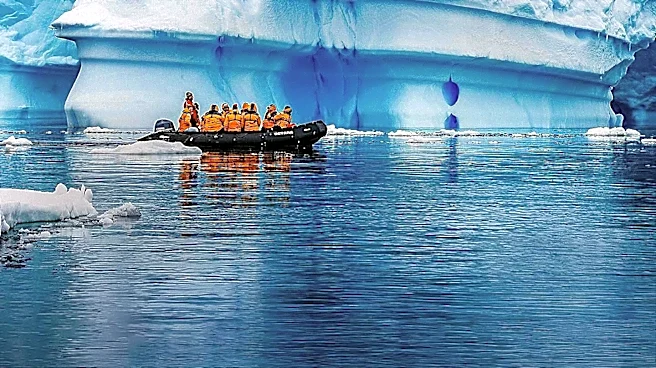
Scientists, including mathematician and climate researcher David Holland of New York University, are exploring large-scale geoengineering concepts to mitigate the rapid melting of glaciers and sea ice in Greenland and Antarctica. Holland and his team
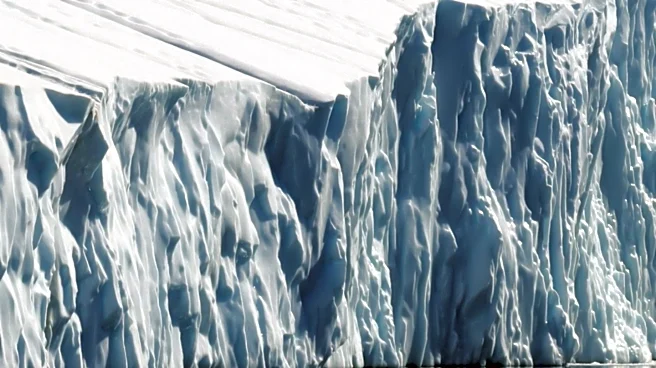
are conducting fieldwork at Greenland's Jakobshavn Glacier and Antarctica's Thwaites Glacier, two of the fastest-melting glaciers globally. Their research involves gathering synchronous data from various sensors, drones, and satellites to better understand the mechanisms driving glacial retreat and improve predictions for sea level rise. One audacious idea being investigated is the feasibility of an underwater barrier, or 'sea curtain,' to block warm ocean currents from reaching and melting glaciers from below. Robotic moorings are being deployed to collect critical data on water depth and current strength in underwater canyons that funnel warm water towards glaciers like Thwaites. This research aims to determine if such an engineering solution could stabilize these massive ice formations, alongside efforts to reduce fossil fuel consumption.
Why It's Important?
The rapid melting of glaciers in Greenland and Antarctica poses a significant threat to global sea levels, with potential impacts on coastal communities, ecosystems, and economies worldwide. The Thwaites Glacier alone holds enough water to raise global sea levels by up to 10 feet, making its stability a critical concern. This research into geoengineering solutions represents a proactive, albeit controversial, approach to addressing the consequences of climate change, moving beyond traditional mitigation efforts. If successful, such interventions could buy valuable time for societies to adapt to a changing climate and transition to sustainable energy sources. However, the scale and potential unintended consequences of geoengineering projects raise complex ethical, environmental, and geopolitical questions, highlighting the urgent need for comprehensive data and international collaboration in climate science and policy.
What's Next?
The immediate next steps involve continued data collection from the robotic moorings and other sensors deployed in the polar regions. This data will be crucial for assessing the feasibility and potential effectiveness of an underwater barrier or other geoengineering interventions. Scientists will analyze the measurements of warm water currents and depths to determine if a 'sea curtain' could realistically impede glacial melt. The research will also contribute to refining climate models and sea level rise predictions. Concurrently, the scientific community and policymakers will need to engage in broader discussions about the ethical implications, governance, and potential adverse effects of large-scale geoengineering. The findings from Holland's research will inform future decisions on whether to pursue such ambitious projects as a complement to, or last resort against, the accelerating impacts of climate change.
Beyond the Headlines
The exploration of geoengineering solutions for glacier melt delves into profound ethical and philosophical questions about humanity's role in managing planetary systems. While offering a potential lifeline against catastrophic sea level rise, these interventions challenge the notion of natural processes and raise concerns about unintended ecological disruptions. Critics, such as Rob Larter of the British Antarctic Survey, highlight the impracticality, potential adverse consequences, and governance challenges of such large-scale projects. This debate underscores a growing tension between technological optimism and environmental caution. The long-term implications could include a redefinition of environmental stewardship, where human intervention becomes a necessary, albeit risky, component of climate management. It also emphasizes the need for global consensus and equitable decision-making, as the consequences of such actions would be felt across national borders and generations.