




What's Happening?
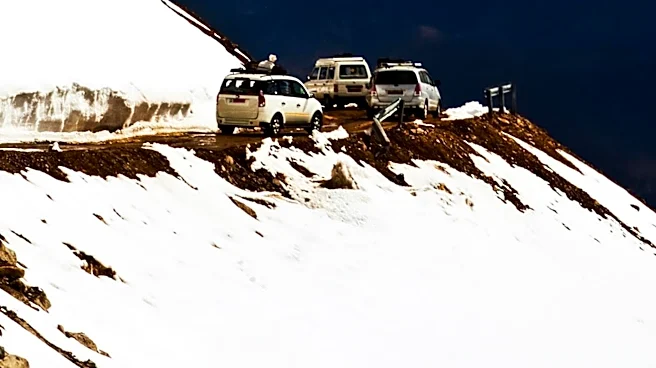
Colorado is bracing for continued snowfall, with high peaks expected to receive between 6 to 12 inches of snow through Thursday morning. The National Weather Service indicates that lower elevation mountain valleys could see 1 to 6 inches. Travel along
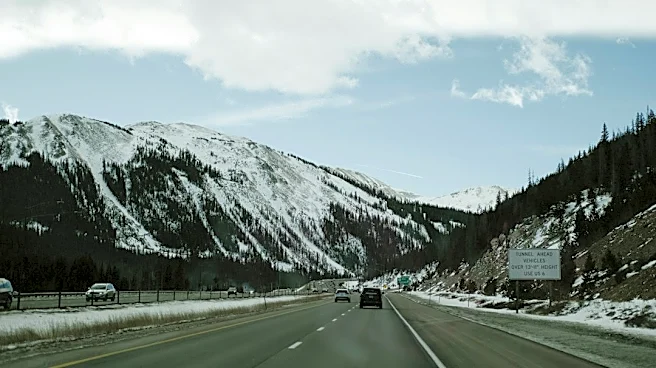
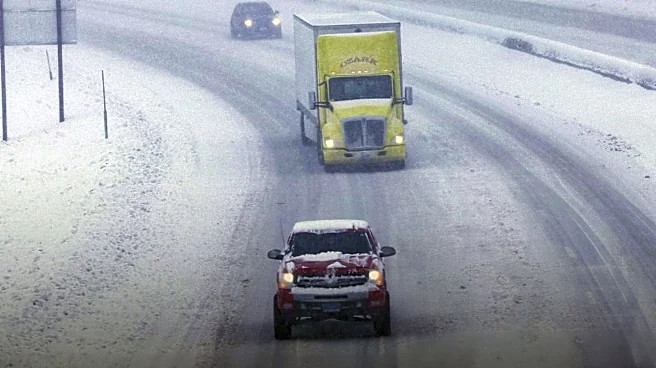
Interstate 70, particularly near the Eisenhower-Johnson Memorial Tunnel complex, is a point of concern, with approximately 8 inches of snow anticipated. Vail Pass is also projected to receive 6 to 8 inches during the same period. While the Front Range metro area is largely expected to be unaffected, with only potential flurries between Colorado Springs and Castle Rock, a 10% chance of a high-end snowfall scenario could bring 18 to 24 inches to high peaks and 8 to 18 inches to mountain valleys, significantly impacting I-70 travel with up to 17 inches near the Eisenhower-Johnson Memorial Tunnel complex.
Why It's Important?
The anticipated snowfall carries significant implications for transportation, public safety, and the local economy in Colorado. Heavy snow can lead to hazardous driving conditions, road closures, and travel delays, particularly on critical routes like I-70, which is a major artery for commerce and tourism. This could disrupt supply chains, impact businesses reliant on winter tourism, and pose risks to commuters and travelers. While beneficial for the state's snowpack, which currently stands at 106% of the long-term norm statewide, the uneven distribution—with the southwestern-most river basin at 430% and the northwestern-most at 30%—highlights regional disparities in water resources. Emergency services and transportation departments will need to be prepared for potential challenges, especially if the high-end snowfall scenario materializes.
What's Next?
Residents and travelers in Colorado, particularly those planning to traverse mountain passes, should monitor National Weather Service updates for the latest snowfall forecasts and travel advisories. Transportation authorities will likely implement chain laws or temporary closures on affected roadways, such as I-70 and Vail Pass, depending on the severity of the snowfall. Businesses in mountain communities should prepare for potential disruptions to operations and adjust staffing accordingly. Individuals are advised to exercise caution, allow extra travel time, and ensure their vehicles are equipped for winter conditions. The ongoing precipitation will contribute to the state's snowpack, which is crucial for water supply in the coming year, but also necessitates vigilance regarding avalanche risks and road safety.
Beyond the Headlines
The varying snowpack levels across Colorado underscore the complex and localized impacts of weather patterns, even within a single state. While some regions are experiencing abundant snowfall, others are lagging, which could lead to future water management challenges. This highlights the broader issue of climate variability and its effects on natural resources and regional economies. The reliance on snowpack for water supply and winter tourism makes Colorado particularly vulnerable to shifts in precipitation patterns. The current snowfall, while potentially disruptive, is a reminder of the delicate balance of the state's ecosystem and the importance of robust infrastructure and emergency preparedness in the face of dynamic weather conditions.