





What's Happening?
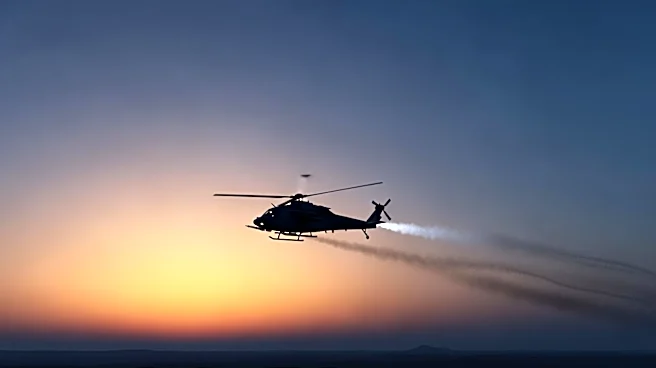
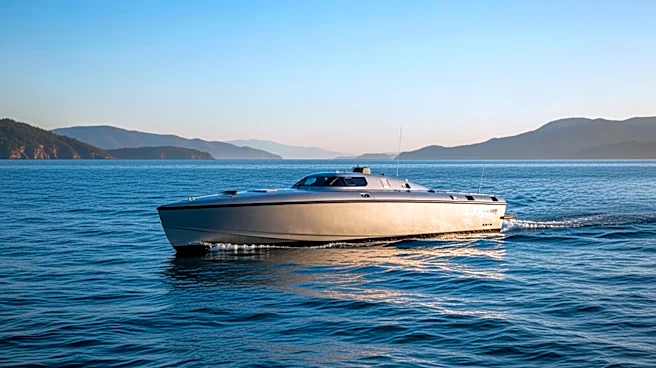
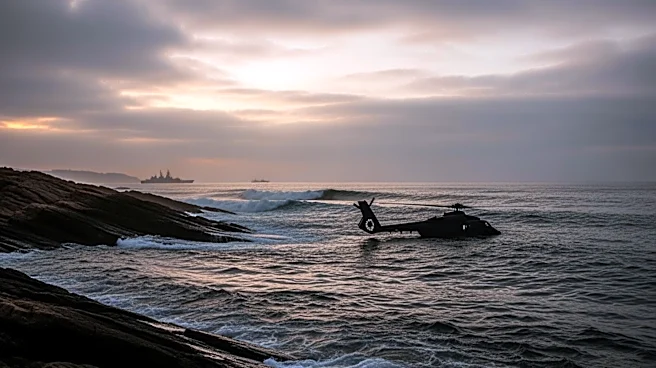
A U.S. Army Apache helicopter was shot down by Iranian forces near the Strait of Hormuz, prompting a rescue mission that marked a significant milestone in military technology. The rescue was conducted by a Saronic Corsair, a 24-foot unmanned surface vessel
operated by the Navy's Task Force 59. This event is notable as it represents the first known instance of an unmanned vessel completing a rescue at sea. The two airmen involved in the incident were safely rescued and are reportedly in stable condition. The Saronic Corsair, part of a fleet of autonomous surface vehicles, was under the operational lead of the U.S. Naval Force Central Command and the 82nd Airborne Division. The vessel, capable of carrying 1,000 pounds and operating over 1,000 nautical miles, was first unveiled in October 2024, and has since been integrated into the Navy's operations.
Why It's Important?
The successful rescue operation underscores the growing role of autonomous technology in military operations, particularly in complex maritime environments. The use of unmanned surface vehicles (USVs) like the Saronic Corsair offers a cost-effective means to enhance the Navy's operational capabilities while minimizing risks to human personnel. This development could lead to broader adoption of such technologies, potentially transforming naval operations and strategy. The Pentagon's investment in these technologies reflects a strategic shift towards leveraging advanced, unmanned systems to maintain a competitive edge in global military engagements. The incident also highlights the strategic importance of the Strait of Hormuz, a critical chokepoint for global oil shipments, and the ongoing geopolitical tensions in the region.
What's Next?
Following this successful operation, the U.S. Navy is likely to continue expanding its fleet of autonomous surface vehicles. The Pentagon has already announced plans to deploy potentially thousands of Corsairs, indicating a significant scale-up in the use of unmanned technology. Future developments may include enhancements in payload capacity and endurance, as outlined in the Navy's Modular Attack Surface Craft program. This program aims to develop high-endurance USVs capable of carrying large payloads, including missiles, over long distances. The integration of such technologies could lead to new tactical and strategic doctrines within the Navy, influencing future military engagements and defense policies.
Beyond the Headlines
The deployment of autonomous surface vehicles raises important ethical and legal questions regarding the use of unmanned systems in combat scenarios. As these technologies become more prevalent, there will be a need to address issues related to accountability, decision-making, and the potential for unintended consequences. Additionally, the reliance on advanced technology in military operations may lead to new vulnerabilities, such as cyber threats targeting these systems. The broader implications of this technological shift could extend beyond the military, influencing civilian sectors and prompting discussions on the role of automation in society.