



What's Happening?
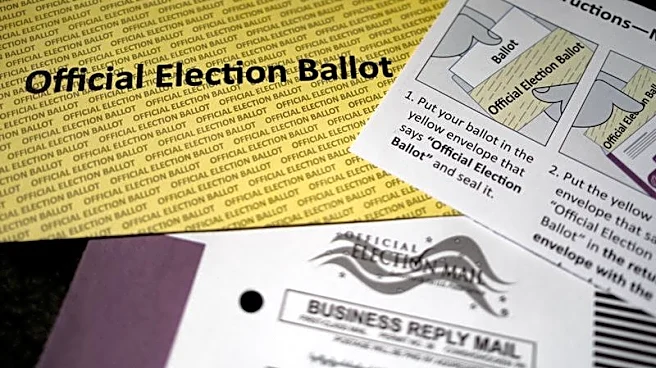
A federal judge has once again temporarily halted President Trump's executive order aimed at limiting mail voting. U.S. District Court Judge Indira Talwani issued a two-week block on the directive, just a week before the first mail ballots are scheduled
to be sent out for the upcoming midterm elections. This marks the second time courts have intervened to block an executive order from President Trump concerning election procedures. The ruling follows renewed lawsuits from Democrats and voting rights groups, which were refiled to comply with a recent Supreme Court decision. The administration had previously issued a formal rule dictating how the U.S. Postal Service would handle states' mail ballots, effectively reigniting the legal dispute. The Postal Service's new requirements include states providing lists of voters who should receive ballots and specific formatting for envelopes. Judge Talwani noted that states lack the time and funds to implement these changes before the midterms.
Why It's Important?
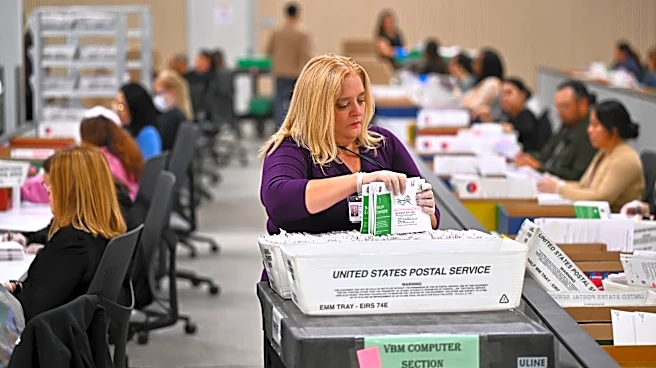
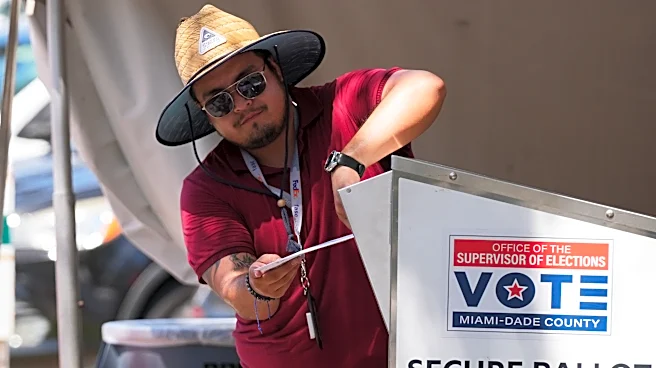
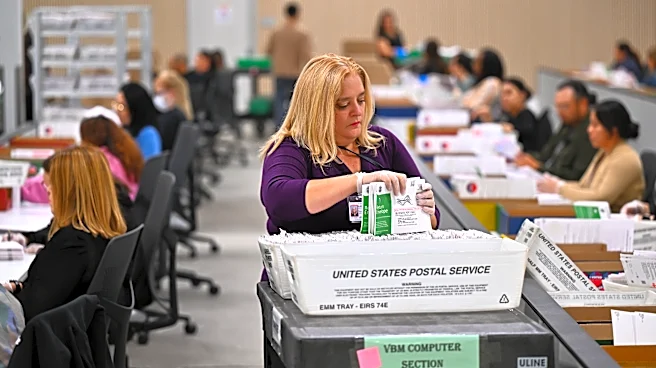
This judicial intervention carries significant implications for the upcoming midterm elections, as nearly one-third of American voters cast their ballots by mail. Election officials have expressed concerns about the feasibility of revising their systems to comply with the new Postal Service directives within the tight timeframe. The ongoing legal battle highlights a fundamental disagreement over the authority to set election rules, with Democrats and voting rights groups arguing that the Constitution grants this power to states and Congress, not the President or the Postal Service. President Trump has consistently criticized mail voting, despite a 2025 Brookings Institution report indicating that mail voting fraud is exceedingly rare. The outcome of this legal challenge could impact voter access and the administration of elections nationwide, potentially disenfranchising voters if states cannot adapt to new requirements.
What's Next?
The temporary block on President Trump's executive order is set for two weeks, with a hearing in the case scheduled for September 3. The administration may appeal this decision, potentially sending the case back to the Supreme Court. The legal battle is expected to continue, as the administration has shown a consistent effort to implement changes to mail voting procedures. States and election officials will be closely watching the developments, as the final ruling will determine the operational requirements for mail-in ballots in the upcoming midterms. The ongoing uncertainty could lead to further legal challenges and administrative complexities for election authorities across the country, potentially affecting voter turnout and the overall integrity of the election process.
Beyond the Headlines
The repeated legal challenges to President Trump's executive orders on mail voting underscore a broader tension between federal and state authority in election administration. This dispute touches upon the constitutional framework that delineates powers between different levels of government. Beyond the immediate impact on the midterms, the case raises questions about the long-term future of mail-in voting, a practice that has become increasingly prevalent. The debate also highlights the politicization of election procedures, with differing views on voter access and election security. The judiciary's role in mediating these disputes is crucial, as its decisions can shape the landscape of American democracy and the public's confidence in the electoral system. The outcome could set precedents for future federal interventions in state-run elections.