


What's Happening?
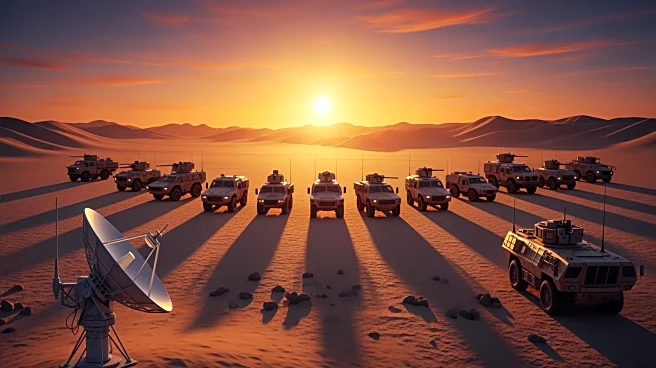
The U.S. is significantly increasing its military presence in the Middle East, with the USS Abraham Lincoln aircraft carrier and its strike group now positioned in the Indian Ocean. This move, ordered by President Trump, is part of a broader strategy
to prepare for potential military action against Iran. The buildup includes additional cargo jets and refueling tankers, enhancing the U.S.'s ability to respond to Iranian actions. President Trump has threatened military strikes in response to Iran's crackdown on anti-government protests, which have resulted in thousands of deaths.
Why It's Important?
The military buildup highlights the escalating tensions between the U.S. and Iran, with potential consequences for regional stability and global energy markets. The presence of U.S. forces serves as a deterrent but also increases the risk of conflict, which could disrupt oil supplies through the Strait of Hormuz. The situation underscores the complexity of U.S. foreign policy in the Middle East, balancing military readiness with diplomatic efforts to prevent escalation. The outcome of this standoff could have significant implications for U.S. relations with regional allies and adversaries.
What's Next?
The U.S. military's readiness suggests that a decision on military action could be made soon, depending on Iran's actions. Diplomatic efforts may be pursued to de-escalate tensions, but the potential for conflict remains high. The international community will likely monitor the situation closely, with possible interventions to prevent escalation. The outcome of this standoff could have long-term implications for U.S. foreign policy and its role in the Middle East.