







What's Happening?
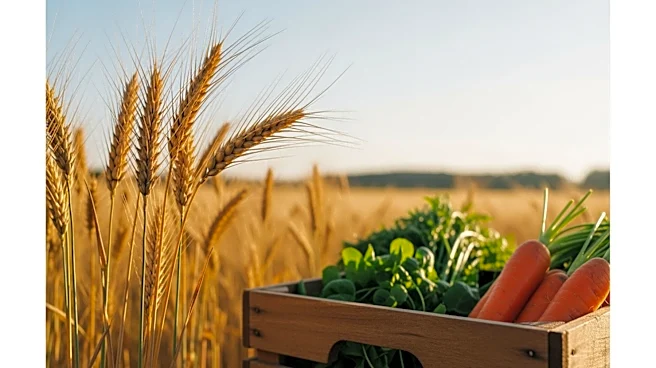
North Carolina lawmakers have advanced a bill that allocates $6 million to bolster local agriculture and address food insecurity. During a House Agriculture and Environment Committee meeting, Theresa Lambert from the North Carolina Department of Agriculture &
Consumer Services (NCDA&CS) provided updates on various research projects. The state, which generates $111.1 billion annually from agriculture, is a leading producer of flue-cured tobacco and poultry. The research division has developed a system to calculate feed efficiency in the beef industry, aligning it with pork and poultry sectors. Additionally, a water farming project aims to mitigate flood impacts and improve irrigation efficiency. The bill, presented by State Rep. Karl Gillespie, includes $4 million for the FarmShare Food Hub program and $2 million for the Double Up Food Bucks Program, with accountability ensured through annual reporting.
Why It's Important?
The advancement of this bill is significant as it addresses both agricultural innovation and food insecurity in North Carolina. By investing in research and development, the state aims to enhance agricultural efficiency and sustainability, which is crucial for maintaining its status as a leading agricultural producer. The funding for programs like FarmShare and Double Up Food Bucks supports local farmers and provides food access to low-income families, ensuring that economic benefits circulate within the state. This initiative reflects a broader trend of integrating technological advancements in agriculture to address environmental challenges and improve food security.
What's Next?
The bill will proceed to the appropriations committee for further consideration. If passed, the allocated funds will be distributed to the respective programs, with oversight provided by the Joint Legislative Oversight Committee on Agriculture and Natural and Economic Resources. The implementation of these programs could lead to increased agricultural productivity and improved food access for North Carolina residents. Stakeholders, including farmers and community organizations, are likely to monitor the bill's progress and its impact on local agriculture and food systems.
Beyond the Headlines
The focus on precision agriculture and smart irrigation systems highlights a shift towards more sustainable farming practices. These innovations not only improve resource efficiency but also reduce environmental impact, aligning with global efforts to combat climate change. The development of a Fraser Fir seed processing center represents a unique advancement in agricultural research, potentially setting a precedent for other states to follow. This initiative underscores the importance of localized research and development in addressing specific agricultural challenges.