





What's Happening?
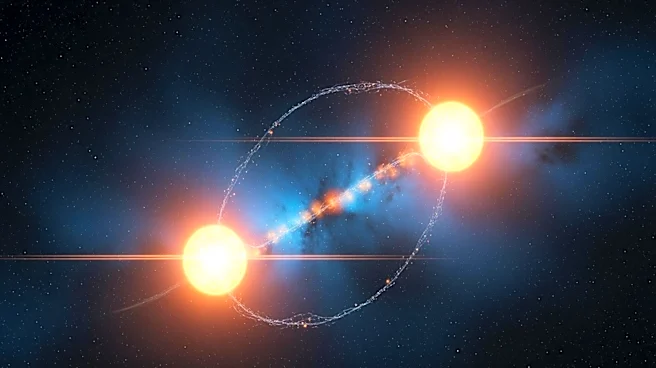
A team of researchers from Tufts University has discovered that sympathetic flares, previously thought to be unique to our Sun, occur on a wide range of stars. This phenomenon involves secondary flares triggered by an initial eruption, creating a ripple
effect. The study, published in The Astrophysical Journal, analyzed over 16,000 stars, including M dwarfs, which are smaller and cooler than the Sun. The discovery suggests a universal mechanism behind these flares, challenging previous assumptions about stellar behavior.
Why It's Important?
This discovery significantly advances our understanding of stellar phenomena, suggesting that sympathetic flaring is a common feature across different types of stars. It opens new avenues for research into the mechanisms driving these flares, which could have implications for our understanding of stellar evolution and activity. The findings also highlight the need for advanced detection algorithms, like the TOFFEE algorithm used in this study, to accurately identify and analyze such phenomena.