
What's Happening?
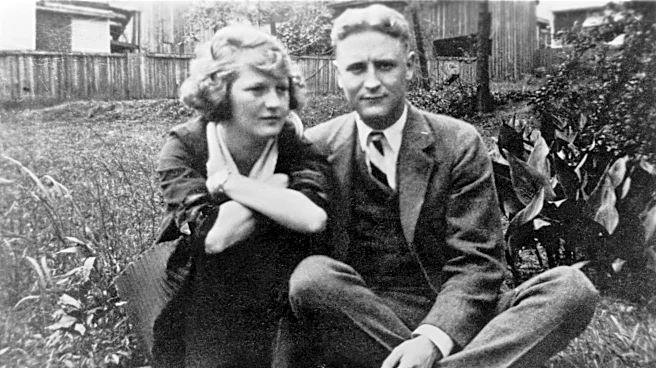
F. Scott Fitzgerald, an American novelist, essayist, and short-story writer, is recognized for his vivid portrayal of the Jazz Age, a term he himself popularized. Born on September 24, 1896, in Saint Paul,
Minnesota, Fitzgerald published four novels, four story collections, and 164 short stories during his lifetime. While he achieved some success in the 1920s, his critical acclaim largely came posthumously. His most renowned work, 'The Great Gatsby,' published in 1925, is considered a classic. Fitzgerald passed away in Hollywood on December 21, 1940, at the age of 44. His writings captured the flamboyance and excess of an era, offering a unique perspective on American society during that period.
Why It's Important?
F. Scott Fitzgerald's contributions are crucial to American literature, particularly his ability to encapsulate the spirit of the Jazz Age. His works, especially 'The Great Gatsby,' provide invaluable insights into the cultural, social, and economic landscape of the 1920s in the United States. The themes explored in his novels, such as the pursuit of the American Dream, social class, decadence, and disillusionment, continue to resonate with readers and scholars today. His popularization of the term 'Jazz Age' itself highlights his influence on shaping the understanding and perception of that historical period. Fitzgerald's literary legacy ensures that future generations can engage with and learn from the complexities of a pivotal era in U.S. history, offering a mirror to both the aspirations and the moral ambiguities of the time.
What's Next?
While F. Scott Fitzgerald's life and literary output are complete, his works continue to be studied, analyzed, and reinterpreted in academic settings and popular culture. New editions of his books are regularly published, and adaptations of his stories, particularly 'The Great Gatsby,' are frequently produced across various media, including film, television, and theater. Literary scholars will continue to explore the nuances of his writing, his biographical context, and his enduring relevance to contemporary issues. Educational institutions will maintain his works as essential reading for understanding American literature and history, ensuring his narratives remain a cornerstone of cultural discourse.
Beyond the Headlines
Beyond the immediate narrative of his life and works, Fitzgerald's legacy delves into the broader cultural impact of literature on societal self-perception. His ability to coin and popularize the 'Jazz Age' demonstrates the power of an artist to define an era, influencing how it is remembered and understood. His stories often explore the ethical dilemmas inherent in wealth and social ambition, prompting ongoing discussions about the true cost of the American Dream. The enduring popularity of 'The Great Gatsby' suggests a timeless fascination with themes of illusion, reality, and the human condition, making Fitzgerald's work a continuous point of reference for examining societal values and individual aspirations in the U.S. and beyond.