

What's Happening?
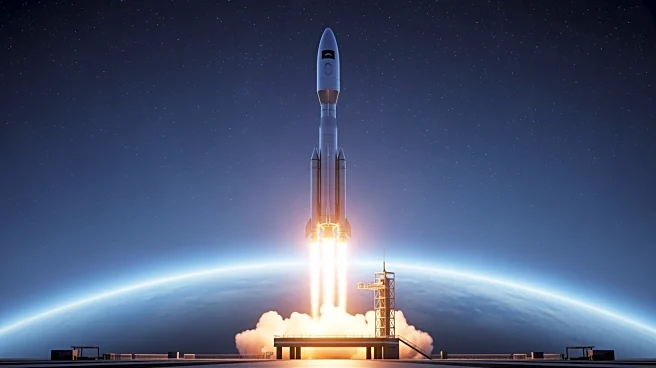
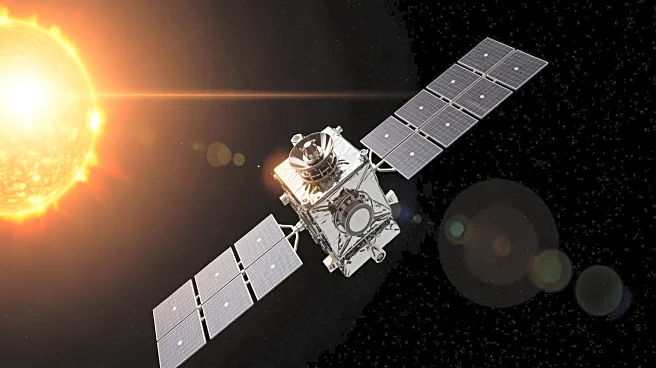
On February 14, 1980, the Solar Maximum Mission, commonly known as SolarMax, was launched from Cape Canaveral, Florida. The mission aimed to enhance understanding of solar flares, the solar constant, and the solar atmosphere by carrying instruments to observe
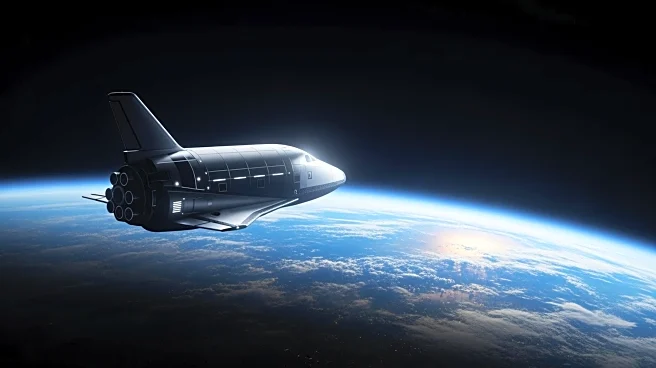
the Sun in X-ray, gamma ray, and ultraviolet spectrums. Shortly after its launch, SolarMax experienced technical difficulties, including an electronics malfunction and a fuse failure, which rendered it unable to point at the Sun. It was placed in standby mode for three years until 1984, when the Space Shuttle Challenger successfully rendezvoused with the satellite. This marked the first-ever repair mission of its kind, as astronauts captured and repaired SolarMax in the shuttle's payload bay. The mission provided valuable data on solar phenomena and observed Halley's Comet in 1986 before concluding in 1989.
Why It's Important?
The SolarMax mission was pivotal in advancing the understanding of solar phenomena, particularly solar flares and coronal mass ejections (CMEs). The data collected by SolarMax contributed significantly to solar physics and helped improve predictions of space weather, which can impact satellite operations, communications, and power grids on Earth. The successful repair of SolarMax by the Challenger crew demonstrated the feasibility of in-orbit satellite repairs, setting a precedent for future missions. This capability is crucial for maintaining and extending the life of valuable space assets, thereby maximizing the return on investment in space exploration and research.