



What's Happening?
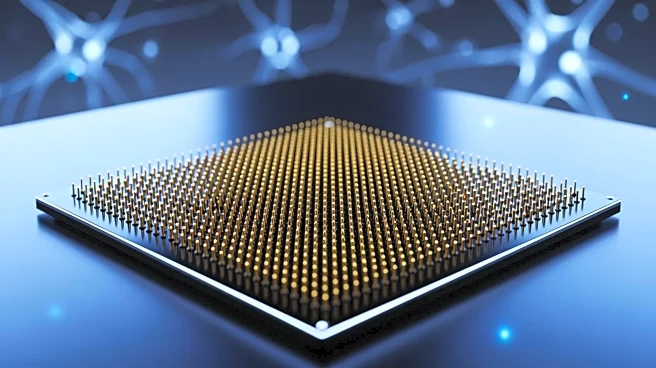
Researchers from Columbia University, New York Presbyterian Hospital, Stanford University, and the University of Pennsylvania have developed a new brain-computer interface (BCI) called the Biological Interface System to Cortex (BISC). This device, described
in Nature Electronics, features a single silicon chip that integrates 65,536 electrodes and 1,024 channels, allowing for ultra-high resolution neural recording and wireless operation. Unlike traditional BCIs that require larger electronics and are more invasive, BISC is minimally invasive, fitting between the brain and skull. Preclinical studies in animals have shown reliable recordings from various brain cortices, and human trials are underway. The BISC aims to maximize information flow to and from the brain while minimizing surgical invasiveness.
Why It's Important?
The development of the BISC represents a significant advancement in the field of brain-computer interfaces, potentially transforming how neurological disorders are treated. By providing a minimally invasive method to interface with the brain, this technology could lead to new treatments for conditions like drug-resistant epilepsy and other neuropsychiatric disorders. The ability to wirelessly communicate with AI and external devices opens up possibilities for adaptive neuroprosthetics and enhanced human-machine interactions. This innovation could revolutionize medical treatments and improve the quality of life for individuals with neurological conditions.
What's Next?
The research team is conducting studies in human patients to explore the BISC's potential for short-term inoperative recordings. As the technology progresses, it may lead to broader applications in treating brain disorders and interfacing with machines. The success of these trials could pave the way for regulatory approvals and eventual commercialization, potentially changing the landscape of neurological treatment and human-AI interaction.