




What's Happening?
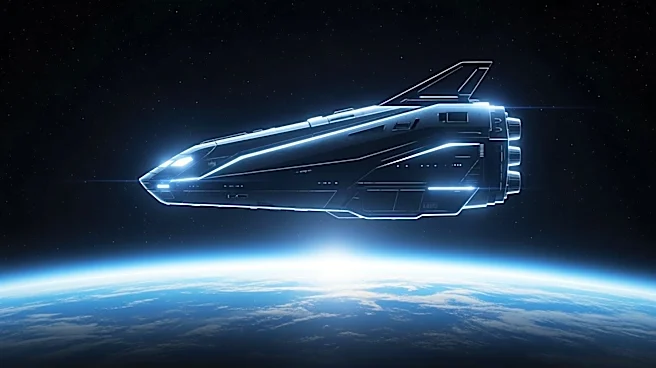
NASA successfully launched the Northrop Grumman CRS-24 mission, sending approximately 11,000 pounds of cargo to the International Space Station (ISS). The Cygnus XL spacecraft, launched aboard a SpaceX Falcon 9 rocket from Cape Canaveral, carries scientific
experiments and crew supplies. Key experiments include advancements in quantum science, therapeutic stem cell production, and studies on the gut microbiome. The mission aims to enhance space weather models and protect space infrastructure. The spacecraft, named S.S. Steven R. Nagel, will remain at the ISS until October before disposing of trash through atmospheric re-entry.
Why It's Important?
This mission underscores NASA's commitment to advancing scientific research and technology development in space. The experiments aboard the ISS have the potential to revolutionize fields such as computing, medicine, and environmental science. By improving space weather models, NASA aims to safeguard critical infrastructure, ensuring the reliability of GPS and radar systems. The mission also highlights the collaboration between NASA and commercial partners like Northrop Grumman and SpaceX, showcasing the growing role of private companies in space exploration.