





What's Happening?
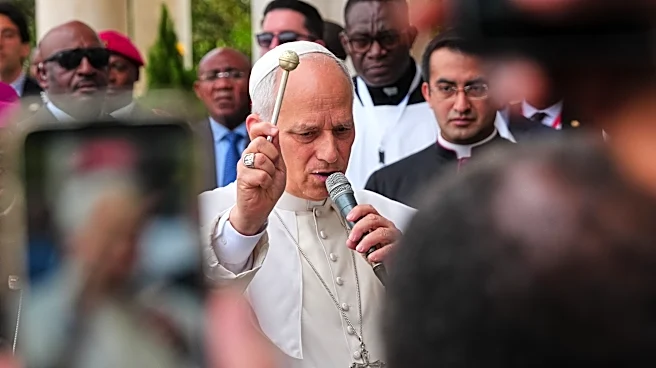
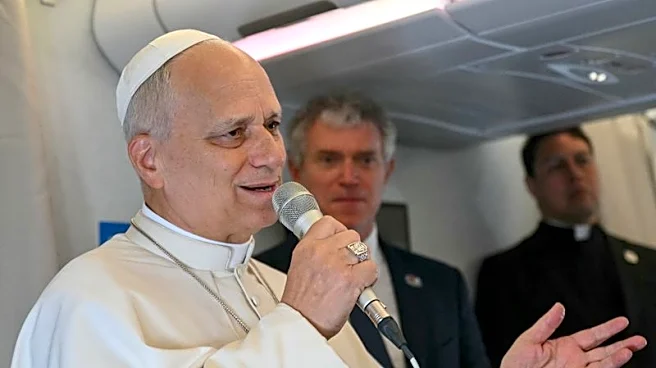
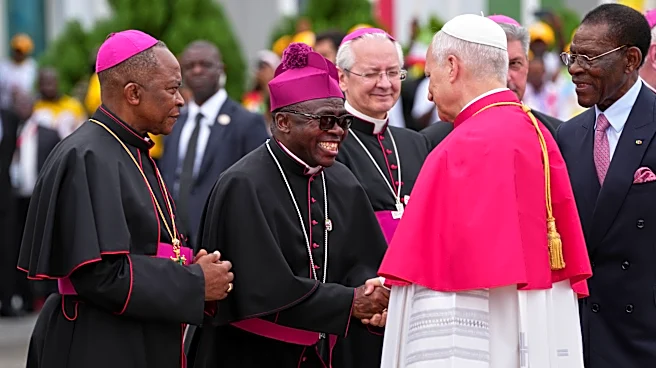
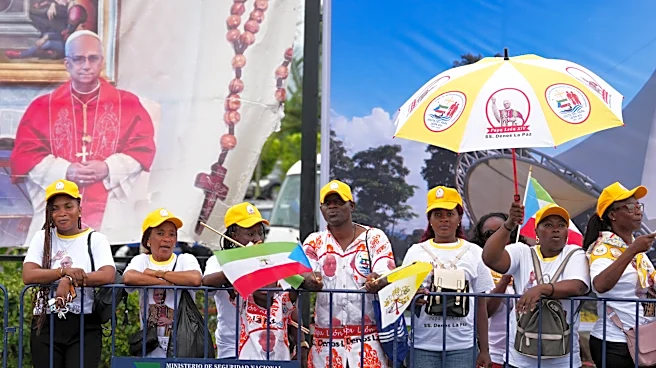
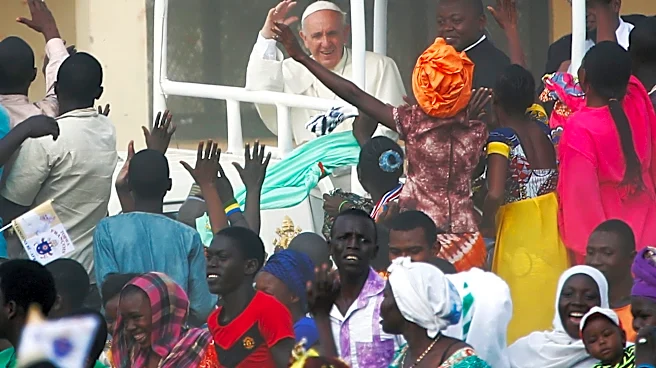
Pope Leo XIV has called for the United States and Iran to return to peace negotiations, emphasizing the need for a 'culture of peace' over violence. During a news conference on his return from a pastoral visit to Africa, the Pope condemned capital punishment
and urged countries to respect human dignity, particularly in the treatment of migrants. He highlighted the importance of promoting values without resorting to violence, referencing the death of a Lebanese boy in a recent conflict as a poignant example. The Pope also addressed the rights of countries to control their borders, while stressing the need for wealthier nations to improve conditions in poorer countries to reduce forced migration.
Why It's Important?
The Pope's call for renewed peace talks between the U.S. and Iran comes at a time of heightened tensions and ongoing conflicts in the region. His condemnation of capital punishment aligns with the Catholic Church's stance on the sanctity of life, potentially influencing public opinion and policy discussions in countries where the death penalty is still practiced. The Pope's remarks on migration and human dignity may impact international discourse on immigration policies, urging a balance between border control and humanitarian considerations. His comments on the church's focus on sexual morality versus broader social justice issues could prompt a reevaluation of priorities within the Catholic community.
What's Next?
The Pope's statements may lead to increased diplomatic efforts to resume peace talks between the U.S. and Iran. His condemnation of capital punishment could inspire advocacy groups to push for policy changes in countries that still practice the death penalty. The Pope's emphasis on migration and human dignity might influence future discussions at international forums, potentially leading to more comprehensive immigration policies. Within the Catholic Church, there may be a shift towards addressing broader social justice issues, as suggested by the Pope's comments on the church's moral teachings.
Beyond the Headlines
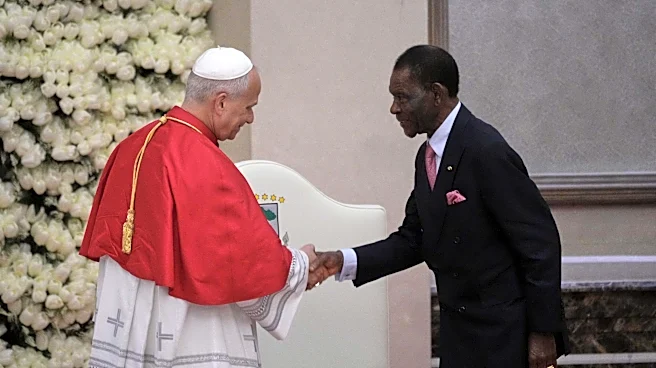
Pope Leo XIV's visit to Africa and his subsequent statements highlight the Vatican's diplomatic role in global affairs. His approach to addressing political leaders with subtlety rather than direct condemnation reflects a strategic use of soft power. The Pope's focus on broader social justice issues, beyond sexual morality, suggests a potential shift in the church's engagement with contemporary societal challenges. This could lead to a more inclusive dialogue within the church, addressing issues such as economic inequality, freedom of religion, and gender equality.