
What's Happening?
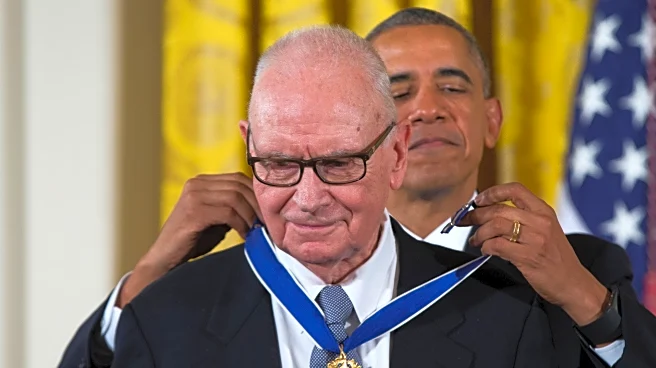
Lou Cannon, a distinguished reporter for The Washington Post and the foremost biographer of Ronald Reagan, has died at the age of 92 due to complications from a stroke. Cannon's career at The Post spanned
from 1972 to 1998, during which he became a leading authority on Reagan, covering his political journey from California governor to U.S. President. Cannon's work included a weekly column titled 'Reagan & Co.' and several comprehensive biographies that explored Reagan's political strategies and personal complexities. His writings provided insights into Reagan's policies, including his role in ending the Cold War and his handling of domestic issues like the Iran-Contra affair and the AIDS crisis. Cannon's relationship with Reagan was marked by numerous interviews and a deep understanding of the former president's character, which he described as a blend of charm and political acumen.
Why It's Important?
Lou Cannon's work is significant for its detailed chronicling of Ronald Reagan's political life, offering a nuanced perspective on one of America's most influential presidents. His biographies are considered essential reading for understanding Reagan's impact on U.S. politics, including his economic policies and foreign affairs strategies. Cannon's ability to capture the complexities of Reagan's character and presidency has provided historians, political scientists, and the public with a deeper understanding of the era. His reporting not only highlighted Reagan's achievements but also critically examined his shortcomings, contributing to a balanced historical narrative. Cannon's legacy as a journalist underscores the importance of thorough and insightful political reporting in shaping public discourse and historical understanding.
What's Next?
While Lou Cannon's passing marks the end of an era in political journalism, his extensive body of work will continue to serve as a valuable resource for future generations. Scholars and historians will likely continue to reference his writings to gain insights into Reagan's presidency and its lasting effects on American politics. Cannon's approach to political biography may inspire future journalists to pursue in-depth reporting and analysis of political figures, ensuring that the complexities of leadership are captured for posterity. Additionally, his work may prompt renewed interest in the study of Reagan's policies and their implications for contemporary political issues.
Beyond the Headlines
Lou Cannon's exploration of Ronald Reagan's life and presidency goes beyond mere biography, delving into the ethical and cultural dimensions of his leadership. Cannon's work highlights the challenges of understanding a public figure who was both a skilled politician and a complex individual. His writings reveal the intricacies of Reagan's decision-making processes and the influence of his personal experiences on his political views. Cannon's ability to portray Reagan as both a charismatic leader and a man of contradictions offers a template for examining the multifaceted nature of political figures. This approach encourages a more comprehensive understanding of how personal history and public persona intersect in shaping political legacies.